India's Earth-Observation Edge: Pixxel's NRO Win, GalaxEye's OptoSAR and NISAR's Open Data
Pixxel's US NRO hyperspectral contract, GalaxEye's first-on-orbit OptoSAR fusion and NISAR's 100,000+ free L-band SAR products reframe Indian Earth observation as a defensible ISR play with sensor-fusion moats.
Manik Gupta
Founder and editor of DeepTech India. Manik writes about India's frontier technology ecosystem — AI, semiconductors, space, quantum, robotics and biotech — translating research and policy into clear, reliable reporting.
India's commercial Earth-observation sector reached a credibility threshold this year that money alone cannot buy: a US intelligence customer. In May 2026, Bengaluru's Pixxel won a hyperspectral imaging contract from the United States National Reconnaissance Office, the agency that builds and operates America's spy satellites. The award is modest in dollars but large in meaning, and it lands alongside two other developments that, taken together, reframe the investment case for Indian EO from a domestic-analytics story into a defensible intelligence, surveillance and reconnaissance (ISR) play with sensor-fusion moats and foreign government revenue.
Pixxel and the NRO: why a $300k contract matters
The NRO award came through the agency's Strategic Commercial Enhancements Commercial Solutions Opening, a vehicle the NRO uses to evaluate commercial imagery against operational standards. Pixxel's Stage-1 contract is worth $300,000, with an option to extend to $900,000, and it was granted alongside EarthDaily and Finland's Iceye. The figures are small because the structure is a study contract, a paid evaluation of whether Pixxel's data meets the NRO's requirements. The strategic value is the relationship. An NRO study contract is the front door to far larger operational data purchases, and it certifies, in the most demanding market in the world, that an Indian sensor is good enough to be assessed against America's own.
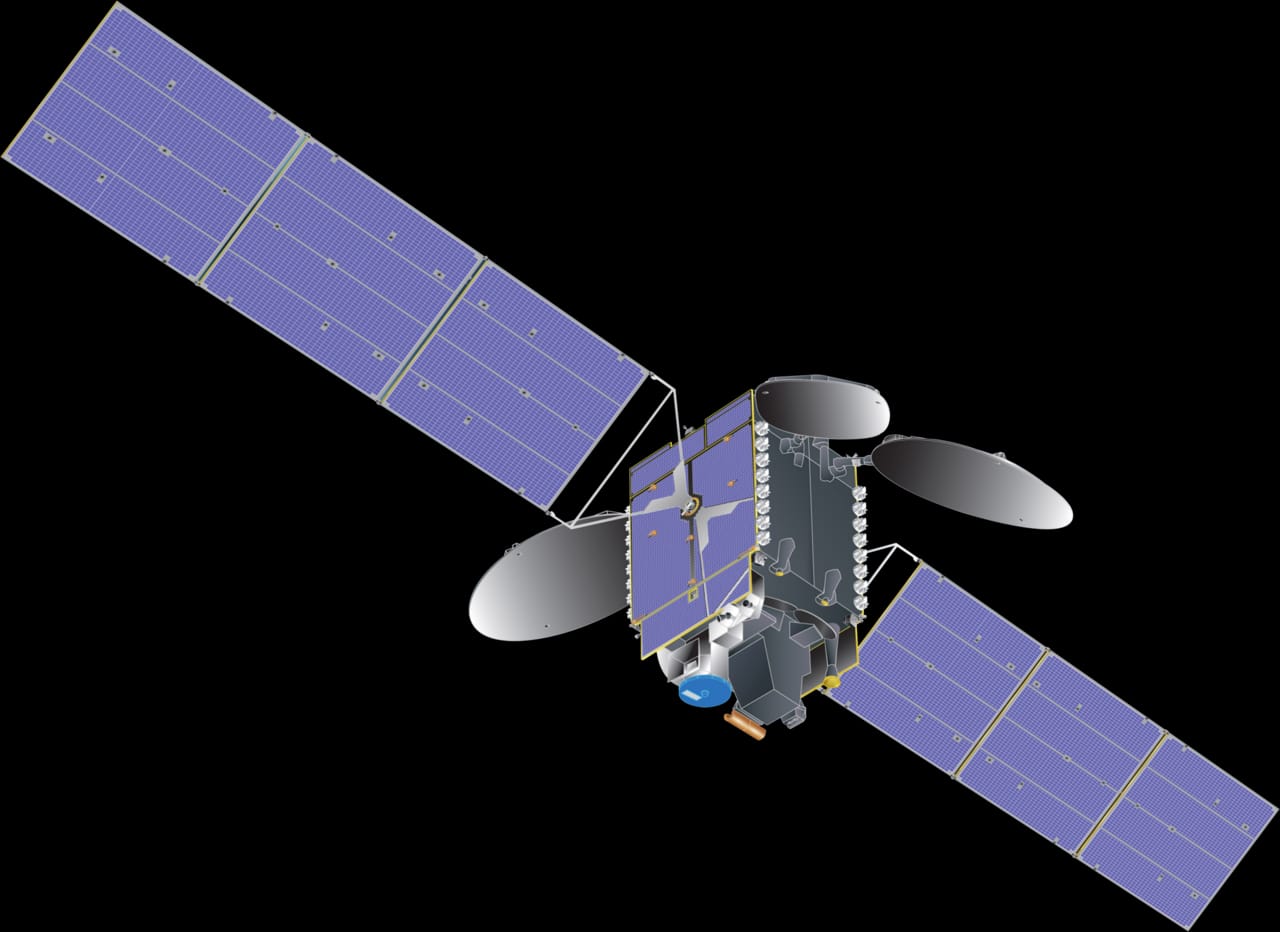
What Pixxel is selling is hyperspectral data, a meaningful step beyond conventional imagery. Its Firefly satellites capture more than 150 spectral bands at 5-metre ground sample distance from a roughly 550 km sun-synchronous orbit, with a 40 km swath. Where a standard optical satellite records a handful of broad colour bands, a hyperspectral sensor slices the reflected spectrum into hundreds of narrow bands, producing a spectral signature for every pixel. That signature can distinguish crop stress, mineral composition, methane plumes, water quality and material types that are invisible to ordinary cameras. Six Firefly satellites are on orbit, backed by roughly $95 million in funding that includes Google as an investor in the Series B. For ISR and resource-monitoring customers, the combination of narrow-band spectral resolution and commercial revisit is the product.
GalaxEye and the OptoSAR bet
The second development is a sensor architecture rather than a contract. On 3 May 2026, GalaxEye launched Mission Drishti, which the company describes as the world's first OptoSAR satellite, fusing synthetic-aperture radar and optical imaging on a single platform. At roughly 160 kg, it is India's largest privately built satellite, and the engineering thesis is fusion at the source.
The two sensor types are complementary in a way that matters operationally. Synthetic-aperture radar transmits its own microwave energy and times the return, so it images through clouds, smoke and darkness, and it is sensitive to surface structure, roughness and moisture. Optical sensors capture reflected sunlight in fine spatial and spectral detail but are defeated by cloud cover and night. Most operators run SAR and optical as separate constellations and fuse the data later in software, which forces alignment across different orbits, times and viewing geometries. By carrying both on one bus, GalaxEye captures co-registered SAR and optical of the same scene at the same instant, which removes the temporal and geometric mismatch and sharpens classification and change detection. The company plans an 8-to-12 satellite constellation through 2029, funded by roughly $27.8 million raised to date. If the fusion advantage holds in operation, it is a genuine technical moat, because a competitor cannot replicate single-pass co-registration by stacking two existing constellations.
NISAR and the open-data flywheel
The third leg is public infrastructure, and it changes the economics for everyone downstream. NISAR, the NASA-ISRO Synthetic Aperture Radar mission, launched on 30 July 2025 aboard a GSLV-F16. It is the first satellite to carry both L-band and S-band radar, giving it a roughly six-day revisit and the ability to detect ground deformation at centimetre scale across the entire land and ice surface. The program cost exceeds $1.5 billion.
The commercially decisive fact is the data policy. By late February 2026, the mission had released more than 100,000 L-band SAR products through NASA's Alaska Satellite Facility DAAC, generating on the order of 85 terabytes per day. This is freely available, calibrated, science-grade radar at a volume and cadence no private operator could match. For Indian downstream firms, that is raw material at zero acquisition cost. Companies such as SatSure, Pixxel and GalaxEye can build analytics, models and value-added products on NISAR's open L-band feed, then layer their own proprietary sensors on top for the resolution, revisit or spectral bands NISAR does not provide. Open foundational data plus proprietary high-value sensing is the layered model that lets a capital-light analytics company reach customers without first financing a full constellation.
The investment case: fusion plus IC contracts
The investor thesis sharpens when these three threads are read together. Earth observation as a pure imagery business is a commodity headed toward price compression, the same dynamic that squeezed the optical-imagery market over the past decade. The defensible positions are elsewhere. One is unique sensing that competitors cannot cheaply replicate, which is what Pixxel's hyperspectral bands and GalaxEye's single-pass OptoSAR fusion are intended to be. The other is intelligence-community and defence contracts, which carry high margins, long durations, strict supplier certification and meaningful switching costs once a customer's workflows depend on a particular feed.
Pixxel's NRO award is the proof point that an Indian firm can enter that second category. It opens a path to recurring ISR revenue from the best-resourced buyers in the world, and it validates the export potential of Indian-built sensors. For a sector long dependent on domestic government demand, foreign intelligence revenue is a structural upgrade to the addressable market and a hedge against the commoditisation of plain imagery.
Risks and the realistic read
The caveats deserve weight. Pixxel's NRO contract is a study, not an operational purchase, and it may not convert; study contracts are designed precisely to filter out vendors who do not meet the bar. GalaxEye's OptoSAR advantage is demonstrated by a single satellite, and the 8-to-12 satellite constellation through 2029 is a plan that still requires capital and reliable execution to deliver the constellation-scale revisit that analytics customers actually pay for. Open NISAR data lowers the barrier for every competitor equally, so it commoditises the foundational layer even as it enables the value-added one. And the funding base across these firms, tens of millions of dollars each, is small relative to the hundreds of millions Western EO leaders have consumed.
The directional signal is nonetheless strong. India now has a hyperspectral operator inside the NRO's evaluation pipeline, the first OptoSAR platform on orbit, and a free torrent of L-band radar feeding domestic analytics. Sensor fusion and intelligence-community contracts are exactly the two levers that turn Earth observation from a commodity into a defensible ISR business, and Indian firms are pulling both at once.
Tags
More from Space Technology
U-Space and AXISCADES Sign Cooperation Deal to Explore India's Microsatellite Market
French space company U-Space and Bengaluru's AXISCADES have signed a commercial cooperation agreement to jointly pursue India's microsatellite market, one of three India-France private space deals struck at the Paris International Space Summit.
RIDE! Targets Q3 2028 Launches for Two TakeMe2Space Satellites
The launch-services agreement covers mission management for two spacecraft in the Hyderabad company’s planned orbital-computing constellation. It is a future deployment commitment, not evidence that the network is operating.