
HAL Takes Over the SSLV: Commercializing India's Small-Satellite Launcher
HAL won the ₹511 crore transfer of ISRO's SSLV, the first full handover of an Indian launch vehicle to one firm. The structure frees ISRO for advanced missions and makes HAL an integrated launch-services player.
Manik Gupta
Founder and editor of DeepTech India. Manik writes about India's frontier technology ecosystem — AI, semiconductors, space, quantum, robotics and biotech — translating research and policy into clear, reliable reporting.
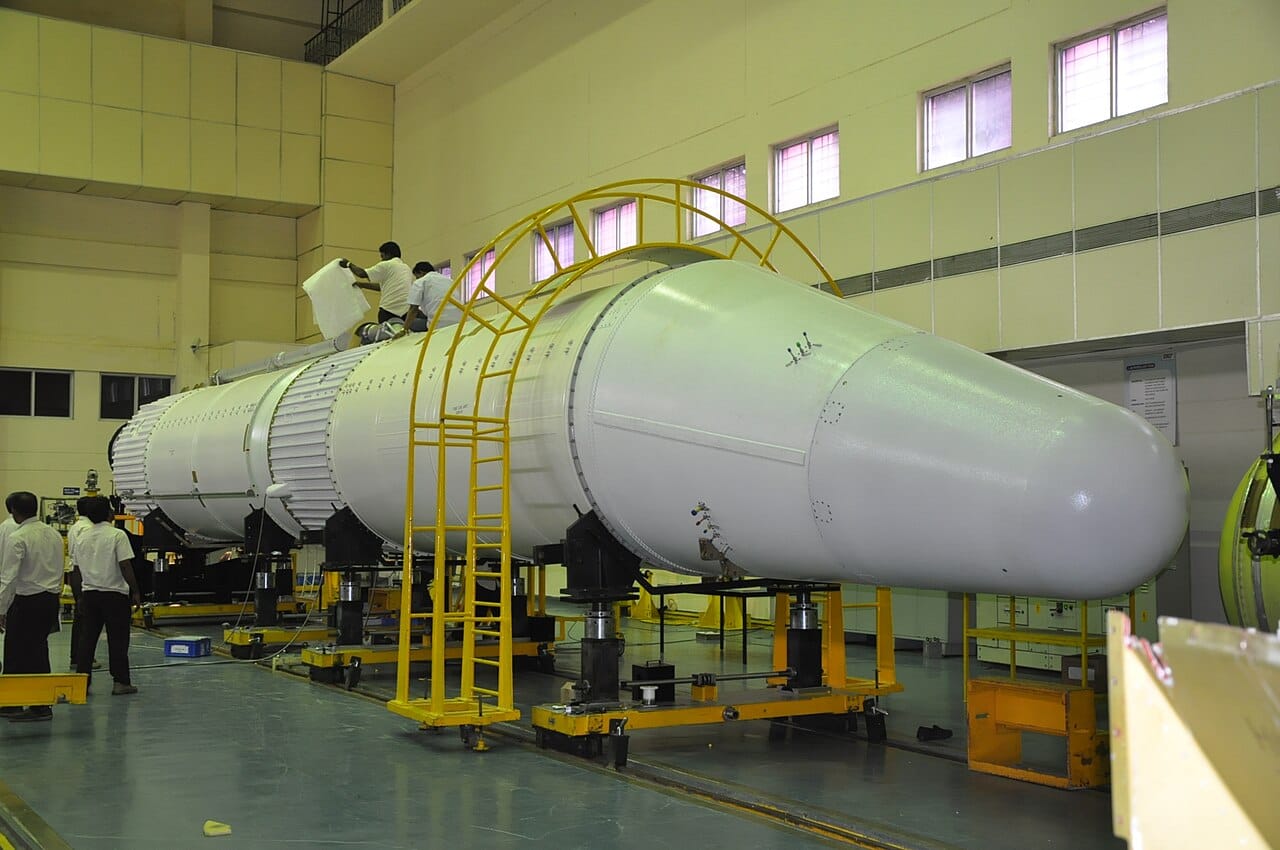
India has done something no spacefaring nation has attempted at this scale: handed an entire operational launch vehicle to a single company to own, build and sell. Hindustan Aeronautics Limited won the ₹511 crore technology-transfer bid for ISRO's Small Satellite Launch Vehicle, a deal announced on 20 June 2025 and signed on 10 September 2025. It is the first time a complete Indian launch vehicle has been transferred to one entity, and it moves the country's space commercialisation from rhetoric into industrial reality.
The deal and who lost it
HAL outbid two serious consortia: one backed by the Adani group through Alpha Design Technologies, and another led by Bharat Dynamics. That the contest drew bidders of that calibre underlines how the launch-services business is now viewed as strategic industrial territory rather than a public-sector preserve.
The mechanics matter. Over roughly two years, ISRO will mentor HAL to build two complete SSLVs end-to-end, transferring not just drawings but the full body of manufacturing know-how, test procedures and integration experience that turn a design into a flight-reliable vehicle. After 2027, HAL gains full autonomy to design, manufacture and market SSLVs, including to international customers. This is a deeper transfer than a licence. A licence rents a design; this hands over the capability to evolve and commercialise the vehicle independently.
The SSLV itself is built for the small-satellite market, lifting up to roughly 500 kg to low Earth orbit. It is deliberately simple, designed for low-cost, on-demand launch with minimal pad infrastructure and a short turnaround, the operational profile small-sat and constellation operators value most.
Why this is the right structure
The strategic logic separates two functions that ISRO had been forced to perform simultaneously. ISRO's comparative advantage is advanced and exploratory missions, Gaganyaan, planetary science, next-generation launch vehicles, where a national agency's appetite for risk and long horizons is essential. Routine, repeatable small-satellite launch is closer to a manufacturing-and-logistics business, and it sits more naturally with an industrial firm optimised for production throughput and customer service. Offloading the SSLV frees ISRO's engineering capacity for missions only a state agency will fund, while giving the commercial vehicle to an operator that can run it as a business.
For HAL, the win is transformational in scope. The company is already India's dominant aerospace manufacturer in military aircraft and helicopters, but the SSLV transfer makes it an integrated launch-services player, able to manufacture the vehicle and sell the launch. That vertical position, building the rocket and offering the ride on it, is rare and commercially powerful, because it captures margin across the whole stack rather than at a single tier.
The wider effect is on the supply chain. A commercialised SSLV, manufactured at industrial cadence by HAL, anchors a domestic ecosystem of component suppliers, propulsion vendors and integration specialists who can plan around a recurring production line rather than sporadic government orders. That predictability is what lets a supply chain invest in capacity and drive unit costs down over time.
The caveats are worth stating. HAL has deep aerospace manufacturing depth but no independent launch-vehicle operating heritage, and running a launch service, manifesting customers, holding schedule, recovering from anomalies, is a different discipline from building airframes. The two-year mentorship is the bridge, and its success is not guaranteed. The SSLV must also compete in a global small-launch market where pricing is set by established players and rideshare alternatives are cheap. What India has built is the right structure: a clean split between exploratory state missions and commercial launch, executed through the first full transfer of a national launch vehicle to one industrial owner. Whether HAL converts that structure into a profitable, globally competitive launch business is the question the post-2027 period will answer.
Tags
More from Space Technology
U-Space and AXISCADES Sign Cooperation Deal to Explore India's Microsatellite Market
French space company U-Space and Bengaluru's AXISCADES have signed a commercial cooperation agreement to jointly pursue India's microsatellite market, one of three India-France private space deals struck at the Paris International Space Summit.
RIDE! Targets Q3 2028 Launches for Two TakeMe2Space Satellites
The launch-services agreement covers mission management for two spacecraft in the Hyderabad company’s planned orbital-computing constellation. It is a future deployment commitment, not evidence that the network is operating.