eNLife Research Raises ₹6 Crore to Hunt Alzheimer's in a Drop of Blood — Years Before Symptoms
Bengaluru deep-tech startup eNLife Research has raised ₹6 crore led by Piper Serica VC Fund to build an AI-powered blood test that aims to detect Alzheimer's and other neurodegenerative diseases years before symptoms appear — tuned to Indian genetic and lifestyle profiles.
A disease that hides for a decade, then arrives all at once
By the time Alzheimer's disease is usually diagnosed, much of the damage is already done. The plaques and tangles that define it begin accumulating in the brain 10 to 20 years before a patient forgets a familiar name or loses their way home. Yet most diagnoses still lean on cognitive tests and costly imaging, administered only once the symptoms have surfaced and the window for meaningful intervention has narrowed. A Bengaluru deep-tech startup, eNLife Research, wants to pull that moment of detection forward by more than a decade — and it has just raised money to try.
A ₹6 crore bet on early detection
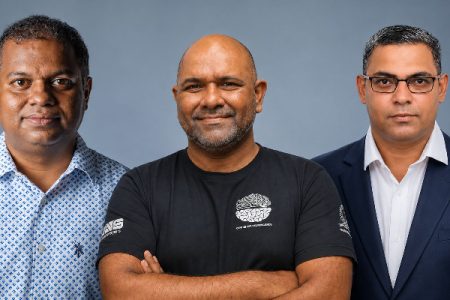
eNLife Research has closed a ₹6 crore seed round led by the Piper Serica VC Fund, the company disclosed this week. Founded in 2025 by Dr Deepak Kumaran Nair along with co-founders Jojo Jacob and Anish Mathew, the startup is building an affordable, AI-powered diagnostic platform designed to flag Alzheimer's and other neurodegenerative diseases years before clinical symptoms appear.
The pitch is deceptively simple: a blood test, not a brain scan. eNLife pairs highly sensitive detection of biomarkers drawn from accessible body fluids with machine-learning models trained to recognise the earliest biological signatures of disease onset. The company says the assay is designed to run at ordinary diagnostic laboratories and to return a result within two to five hours — a workflow that, if it holds up in the clinic, could fold neurodegenerative screening into a routine health check-up rather than a specialist referral.
Why blood, and why now
For most of the past century, confirming Alzheimer's meant either an expensive PET scan, an invasive spinal tap, or, definitively, an autopsy. The global research field has spent the last few years chasing a cheaper proxy: proteins that leak into the bloodstream as the disease takes hold. Blood-based biomarker tests have moved from laboratory curiosity toward clinical reality, and the promise is enormous — a scalable, low-cost screen that could triage who needs a confirmatory scan and who does not.
That is the wave eNLife is trying to ride, and the economics matter as much as the science. A blood draw processed at a neighbourhood pathology lab costs a fraction of a PET scan and requires none of the specialised infrastructure. In a country where dementia care is thinly spread and diagnosis often comes late, a test that is both early and affordable is not a marginal improvement; it changes who can be screened at all.
Built around Indian patients
eNLife's sharpest differentiator is where it plans to look. The company says it is working with leading Indian research institutions to build a platform tuned specifically to Indian genetic and lifestyle risk profiles — a pointed response to the fact that much of the world's biomarker and diagnostic data has been generated in Western populations. Reference ranges and risk models built elsewhere do not always translate, and a test calibrated on Indian cohorts could be more accurate for the patients it is meant to serve.
The startup frames the disease target broadly. While Alzheimer's is the headline use case, the same biomarker-plus-machine-learning approach is meant to generalise to other neurodegenerative conditions, giving eNLife a platform rather than a single product.
From prototype to proof
The seed capital is earmarked for the unglamorous but decisive work of turning a promising idea into a validated diagnostic. eNLife plans to build and validate its blood-based biomarker platform, expand its Bengaluru-based R&D team, and take its first diagnostic assay from prototype to clinical-grade validation. It also expects to begin filing patents over the next 9 to 18 months, spanning its biomarker binders, diagnostic assays, and the detection platform itself.
None of that is a formality. Early-detection diagnostics live or die on clinical validation: a test that flags disease 15 years early is only useful if it is both sensitive enough to catch real cases and specific enough not to frighten healthy people with false alarms. That evidence takes cohorts, time, and regulatory scrutiny, and it is the gap between an appealing prototype and a test a doctor will trust. eNLife's round buys it the runway to start closing that gap.
The bigger picture
The raise is small by the standards of India's headline deep-tech deals, but it fits a growing pattern: investors backing hard-science diagnostics built for Indian conditions rather than imported wholesale. If eNLife can show that a routine blood draw can reliably surface Alzheimer's risk a decade or more before symptoms — and do it at a price Indian labs can absorb — the ₹6 crore will look like one of the more consequential seed cheques of the year. That "if" is still doing a lot of work. For now, the company has capital, a thesis, and the beginnings of a platform; the proof lies in the clinic.
Sources
- Entrackr — Piper Serica leads seed round in deep tech startup eNLife Research
- CIOL — Deeptech Startup eNLife Raises Rs 6 Crore Seed Funding Led by Piper Serica
- Indian Startup Times — eNLife Research Raises ₹6 Crore Seed Funding Led by Piper Serica VC Fund
- Digital Health News — eNLife Raises INR 6 Cr to Advance AI Blood Test for Alzheimer's