DRDO Opens Strategic Missile and Bomb Systems Development to Private Industry
DRDO has floated an expression of interest inviting private Indian firms to co-develop and eventually produce strategic missile and bomb systems, a marked shift beyond the defence public-sector undertakings that have historically held this work.
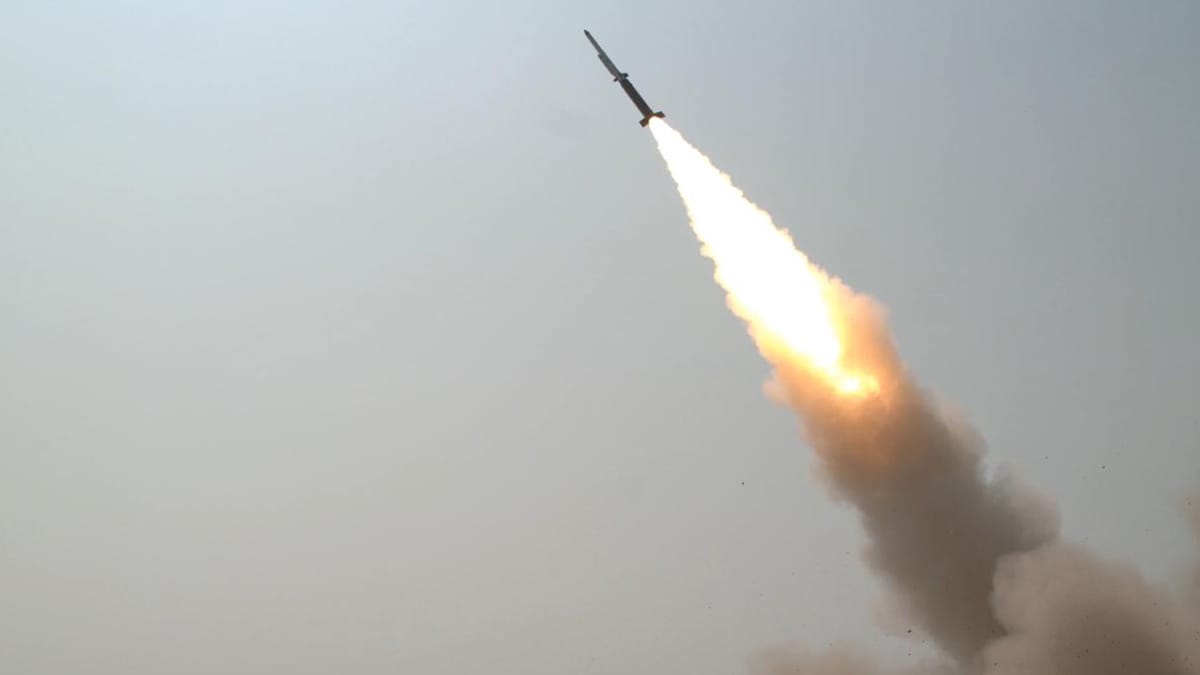
For decades, India's most sensitive weapons programmes — strategic missiles, guided bombs, and the systems that sit closest to the country's nuclear deterrent — have been the preserve of the Defence Research and Development Organisation (DRDO) and a small circle of defence public-sector undertakings (DPSUs) such as Bharat Dynamics Limited. That circle is now widening. In the week of August 18–20, 2026, DRDO's Research Centre Imarat (RCI) — the nodal laboratory for missile and strategic systems — floated an expression of interest (EoI) inviting private Indian companies to partner in the development and, eventually, production of tactical and strategic missile systems and guided munitions.
What DRDO Is Opening Up
The EoI covers systems developed by DRDO's missiles and strategic systems cluster, spanning tactical guided munitions through to strategic weapons in the Agni family and prospective future variants, including submarine-launched systems. Private firms selected through the process will work alongside DRDO scientists to build and test prototypes; if a system clears trials and is ordered in volume by the armed forces, the same private partners are positioned to receive production contracts rather than the work defaulting to a DPSU.
This is a meaningful departure from the traditional model, in which DRDO labs designed a system and handed finished technology to a nominated DPSU for manufacture. Defence Secretary Rajesh Kumar Singh had signalled the shift was coming as early as May 2026, telling industry audiences that even ballistic missile production could eventually open to private companies. The RCI's EoI is the first concrete step translating that intent into a formal process specifically for strategic and tactical missile systems.
Why Now
The move sits squarely inside the government's Aatmanirbhar Bharat (self-reliant India) push in defence manufacturing, which has already opened up drone, small-arms and sensor production to private industry over the past several years. Missile and strategic-systems work is different in kind: it involves classified technology, export-control-sensitive components, and — at the top end — systems tied to India's nuclear posture. Opening even part of that pipeline to private industry is as much a statement of confidence in India's private defence manufacturing base as it is a capacity decision.
It also reflects a practical constraint. DPSU production lines for missile systems have finite capacity, and India's stated ambition — both to equip its own forces faster and to become a credible defence exporter — needs more manufacturing throughput than the existing DPSU network can offer alone. A dual-vendor model, with private firms qualified alongside DPSUs, is intended to reduce single points of failure in the supply chain for strategic systems and shorten the time between a design clearing trials and reaching serial production.
What It Means for Private Industry
For India's private defence manufacturers — companies like Solar Industries, Bharat Forge and a growing tier of MSMEs that have built up precision manufacturing and propellant-handling capability over the past decade through drone- and munitions-adjacent contracts — the EoI is an invitation into a segment of the market that was effectively closed to them. Solar Industries, which has built a substantial explosives and propellant manufacturing base, was among the companies named in early trade coverage of the EoI as a likely participant.
The EoI process itself is structured in stages: companies must first demonstrate manufacturing capability, security clearances and financial capacity to be shortlisted; shortlisted firms then work with RCI and associated DRDO labs — including the Defence Research and Development Laboratory (DRDL) and Terminal Ballistics Research Laboratory (TBRL) — through prototype development and testing, before any production order materialises. That means the practical effect on India's missile production capacity will take years to show up, not months.
The Broader Pattern
This EoI follows a string of DRDO announcements this year loosening the boundary between public and private defence R&D. Days earlier, DRDO's Combat Vehicles Research & Development Establishment (CVRDE) in Chennai formally handed over indigenously developed components — including lube-oil filter assemblies and turbine engine parts — for induction into naval and air force platforms, underscoring how much of DRDO's day-to-day output now flows through supply chains that already include private manufacturers at the component level. Extending that logic to complete missile systems is the larger, more consequential next step.
Whether the EoI translates into actual production orders will depend on how many firms clear the security and capability bar DRDO sets, and on how the armed forces' own procurement pipeline absorbs a second source of supply for systems it has historically single-sourced from DPSUs. For now, the significance is in the policy signal: India's most sensitive weapons programmes are no longer categorically off-limits to private industry.
Sources
- DRDO Opens Strategic Missile Production to Private Industry — Raksha Anirveda
- Moving beyond DPSUs: DRDO opens missile, bomb systems development to private industry — The Week
- DRDO invites private firms to partner for production of missile, bomb systems — Business Today
- The Strategic Weapons Shift: Why India Is Bringing Private Industry Into Its Most Sensitive Defence Programmes — Outlook India
- CVRDE DRDO Hands Over Indigenously Developed Defence Technologies for the Indian Armed Forces — PIB