
DheyaTech’s ₹43 Crore Round Targets Engine Testing and Production Readiness
The Bengaluru company is expanding small gas-turbine manufacturing and testing. Its stated Q4 flight-trial target and certification work remain milestones ahead.
Manik Gupta
Founder and editor of DeepTech India. Manik writes about India's frontier technology ecosystem — AI, semiconductors, space, quantum, robotics and biotech — translating research and policy into clear, reliable reporting.
Backlog edition: 18 September 2026. Reviewed on 20 September; funding reported on 17 September.
DheyaTech's next challenge is to turn small gas-turbine development into repeatable manufacturing and tested engines. The Bengaluru company has raised ₹43 crore in an Avaana Capital-led round to expand production capacity and build an integrated testing facility, according to reporting by Business Standard.
The engineering milestone matters more than the size of the round. The company is targeting flight trials in the fourth quarter of 2026 and pursuing airworthiness certification. Neither milestone should be read as already completed.
A specific engine, rather than a generic propulsion claim
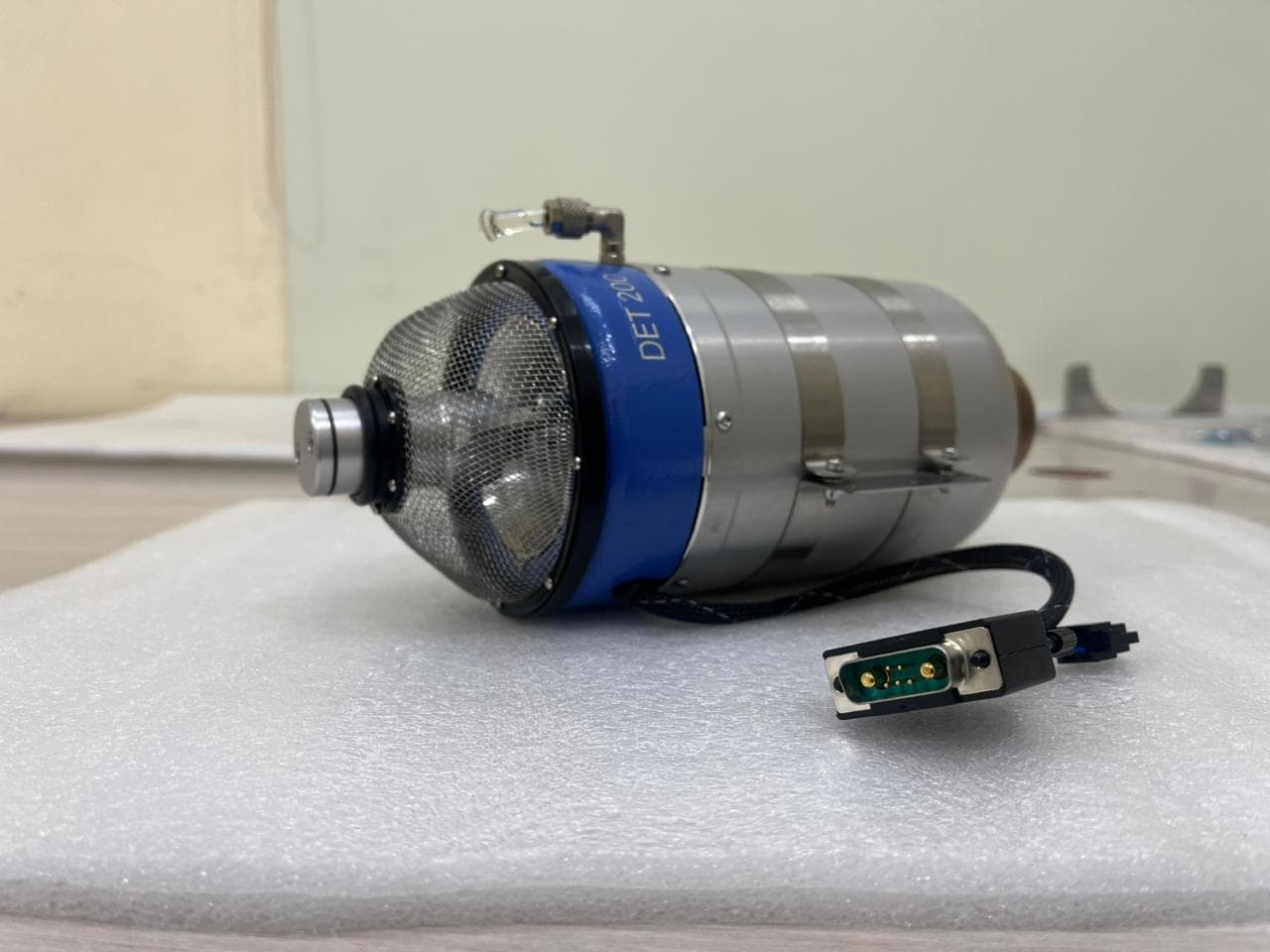
DheyaTech's official product page identifies the DET 200 as a single-spool, 200-newton micro turbojet. It lists an engine weight of 1.8 kilograms and Jet A1 or diesel as fuels. These are manufacturer specifications, not independently measured results from this report.
The distinction between one product and a planned family is important. The DET 200 itself does not deliver the whole thrust range cited for the company's broader engine programme. Nor does an engine specification establish how a complete aircraft performs with its intake, fuel system, controls and mission payload.
What the new capital is intended to change
Business Standard reports that the funding will support manufacturing capacity, integrated testing and work with customers. It also identifies Unimech Aerospace and Manufacturing as a strategic manufacturing partner supplying precision-engineering capabilities.
The company's work extends beyond propulsion. The same report describes an IISc collaboration on a hydrogen-based flexi-fuel combustor for a 60-kilowatt turbogenerator. That is a separate development from the DET 200 pictured here; its power rating should not be presented as the output of the turbojet.
The evidence still needed
A prototype that runs on a bench is an intermediate result. For prospective users, useful evidence would include repeatable starts, performance across stated operating conditions, endurance, failure behaviour and results from integration with the intended platform.
Certification and manufacturing consistency also answer different questions. Approval of a design does not by itself show that every production engine meets its specification. Testing capacity can help connect those stages, provided the programme reports measurable results.
The near-term question is therefore concrete: do the planned flight trials take place, and what do they demonstrate? Publication of test conditions and certification progress would make the transition from development to deployment easier to assess.
Image: the DET 200, photographed on a workbench. Source and credit: Dheya Engineering Technologies.
Sources
Tags
More from DefenceTech
At DEFCON 2026, India's Military Leadership Makes AI Central to Doctrine
At the News18 DEFCON 2026 summit in New Delhi, India's defence minister and military chiefs made clear that AI, autonomous platforms and algorithm-driven operations are now central to national defence doctrine.
Hughes Precision Raises ₹250 Crore to Nearly Triple Ammunition Output
Goa-based ammunition maker Hughes Precision closed a ₹250-crore-plus round to scale small-calibre capacity to 220 million rounds a year and launch a new medium-calibre production line.