
Andhra Pradesh Bets on IIT Alumni With a ₹500-Crore Deep-Tech Fund and Q-Shiva Quantum Test Lab
At the PanIIT Andhra Pradesh Summit, Chandrababu Naidu proposed a permanent council and a ₹500-crore venture fund, highlighted Q-Shiva quantum test systems, and set 3 February 2027 as the target for quantum operations in Amaravati.
Andhra Pradesh has spent much of 2026 pitching Amaravati as India's quantum capital. At the PanIIT Andhra Pradesh Summit 2026 in Vijayawada on 3 October, Chief Minister N. Chandrababu Naidu tried to widen that pitch into something bigger: a deep-tech hub built with the help of the country's IIT alumni network, backed by a dedicated ₹500-crore venture fund.
What was announced
The centrepiece was the "Pan IIT AP 2026" declaration, released in Naidu's presence. It commits the state and PanIIT Alumni India — the umbrella body for alumni of all 23 IITs — to three main things:
- A permanent Pan IIT Amaravati Council, proposed in partnership with the state government. Naidu said the council would be established in the capital soon and would act as the nodal institution for deep-tech development, working with universities, industry and start-ups and advising on the state's deep-tech policy.
- A ₹500-crore Pan IIT Amaravati Venture Fund to back deep-tech start-ups, innovation and investment.
- A pipeline of talent and research links, including 10 industry-linked chairs in universities, a proposed 100-member Global IIT Mentor Network, and plans to connect 10 Andhra Pradesh universities with the Pan-IIT ecosystem.
The declaration sets a target of incubating at least 50 start-ups by 2030, drawing on technologies identified across the 23 IITs and 25 innovation hubs. Its policy package names quantum-AI, semiconductors, space and defence, health, agritech and the blue economy as focus areas.
Q-Shiva: a quantum test bench before the main event
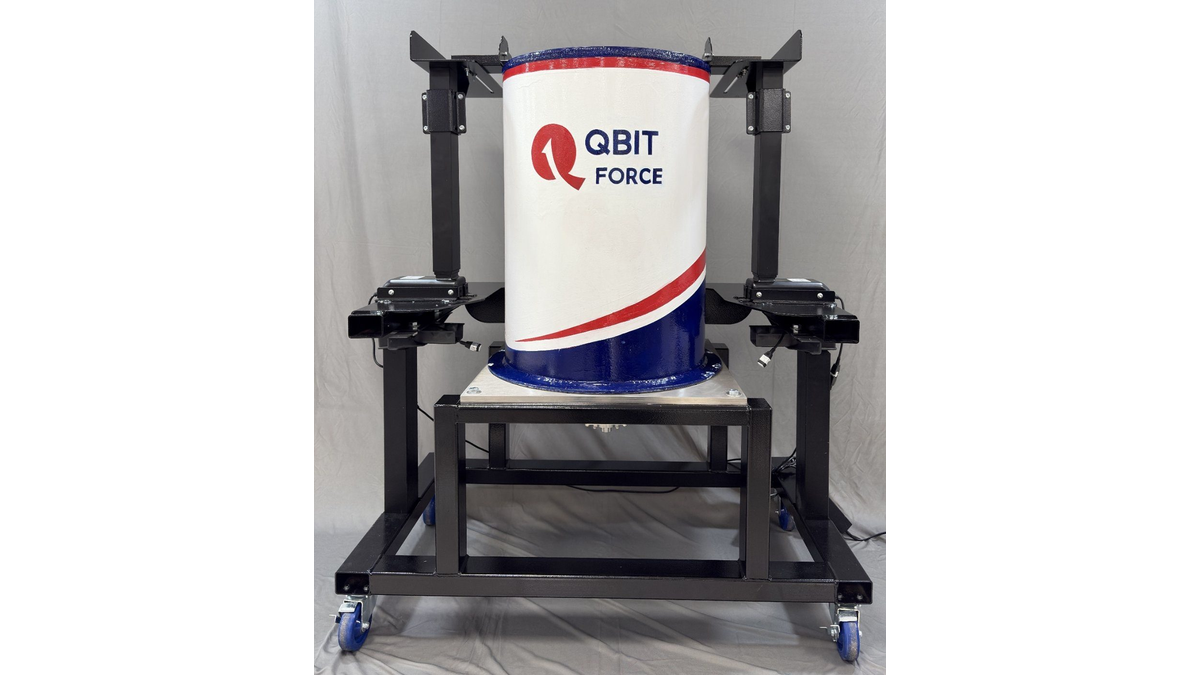
Naidu also highlighted Q-Shiva mini quantum test systems ahead of the main Amaravati installation. The manufacturer, Qbit Force Quantum, describes Q-SHIVA as a cryogen-free platform for testing superconducting devices at temperatures below 4 Kelvin. It is experimental infrastructure for hardware integration and validation, rather than evidence of five fully specified general-purpose quantum computers.
That flagship is the IBM system planned for the Amaravati Quantum Valley. The state said quantum computing operations in Amaravati will begin on 3 February 2027, in collaboration with IBM, Tata Consultancy Services and Larsen & Toubro. Reports describe the main installation as a 156-qubit system.
The detail matters. Reports from the summit do not establish the qubit count or computational performance of the Q-Shiva installation. A 4 K test platform supports low-temperature device experiments; that description alone does not establish circuit-execution capability. Until technical specifications are published, Q-Shiva is best read as a training and testing platform rather than a competitor to the big machine.
Why the alumni angle
India's deep-tech funding gap is well documented: hardware companies need more capital, more time and more specialist mentoring than software start-ups, and early-stage cheques have been scarce. The Centre has responded with the ₹1 lakh crore Research, Development and Innovation (RDI) Fund. States are now competing to attach their own capital and institutions to that national push.
Andhra Pradesh's bet is that IIT alumni — many of them founders, investors and senior executives in India and abroad — can supply what money alone cannot: deal flow, technical due diligence and networks into global customers. A permanent council gives that relationship an institutional home rather than a one-off summit.
The questions to watch
Several details are still missing. The declaration does not yet say who will manage the ₹500-crore fund, how much of it the state will contribute, or whether it will be registered as a SEBI Alternative Investment Fund. Nor is it clear whether investments will be restricted to companies based in Andhra Pradesh.
Execution will also be scrutinised. The 3 February 2027 start date for quantum operations is a stated public target against which the state's quantum programme will be judged.
Still, the direction is clear. Having committed land, a quantum-and-AI university campus and an anchor quantum computer, Andhra Pradesh is now trying to build the start-up layer on top. If the fund and council turn into real companies by 2030, Amaravati could become one of the few Indian deep-tech clusters outside Bengaluru, Hyderabad and Chennai built around a specific frontier technology.