India, Australia and Canada Sign ACITI, a Tech Pact Built Around Critical Minerals and AI
India, Australia and Canada have signed an MoU establishing the ACITI Partnership, a trilateral framework spanning AI, quantum computing, critical minerals and advanced manufacturing — with the underlying goal of building China-resilient supply chains for battery and semiconductor materials.
From a summit photo to a signed framework
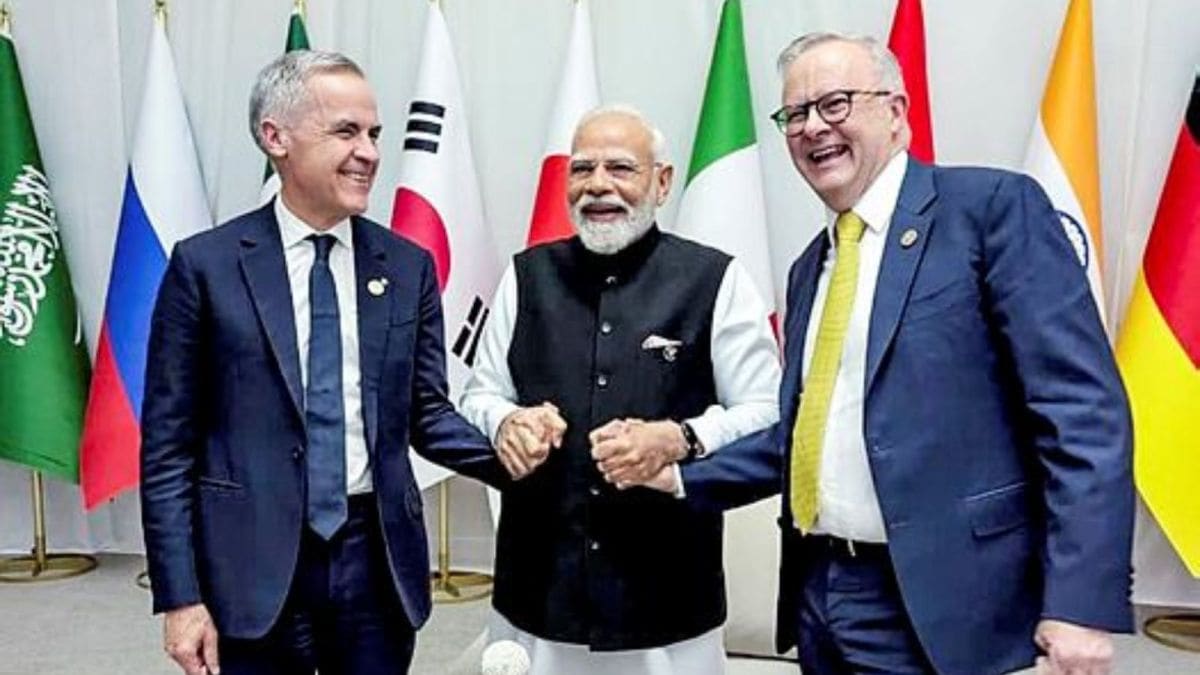
On 9 July 2026, India, Australia and Canada signed a memorandum of understanding formally establishing the Australia–Canada–India Technology and Innovation (ACITI) Partnership — a trilateral framework meant to knit the three democracies together across a cluster of frontier and strategic industries.
The idea had been aired months earlier. Prime Minister Narendra Modi, Australian Prime Minister Anthony Albanese and Canadian Prime Minister Mark Carney had agreed to pursue closer technology cooperation when they met on the sidelines of the G20 Leaders' Summit in Johannesburg in November 2025. The July MoU turns that political intent into a working framework with named domains and, its architects hope, a path to concrete projects.
Six domains, one logic
ACITI spans six areas: artificial intelligence, green energy technologies, critical minerals, cybersecurity, quantum computing and advanced manufacturing. On paper it reads like a grab-bag of every fashionable technology at once. In practice, a single thread runs through it — supply-chain resilience.
The three countries are trying to build what officials describe as closed-loop, resilient supply chains for the materials and components that modern technology runs on, above all the minerals and manufacturing needed for electric-vehicle batteries and advanced semiconductors. Each brings a distinct piece. Australia holds some of the world's richest reserves of lithium, cobalt, rare earths and other critical minerals, and deep mining expertise. Canada offers an advanced research base and its own mineral wealth. India contributes the manufacturing scale, the downstream demand and a vast digital and engineering workforce.
Why India is in the room
For India, the appeal is less about any single technology and more about de-risking. The country's ambitions in batteries, semiconductors, clean energy and electronics all run into the same chokepoint: a handful of critical minerals and processed materials whose supply is concentrated in a small number of countries, China chief among them. New Delhi has stood up a National Critical Minerals Mission precisely to address this, and it has been signing bilateral resource deals to secure feedstock. A trilateral pact that pairs Australian and Canadian mineral supply with Indian processing and manufacturing fits neatly into that strategy.
The quantum-computing and AI strands matter too, though they are earlier-stage. India's National Quantum Mission and its IndiaAI programme both benefit from access to partners with strong research ecosystems, shared standards and talent mobility — the kind of soft infrastructure that trilateral frameworks are good at building. Cybersecurity and advanced manufacturing round out an agenda that is as much about trust and interoperability as about any specific machine.
The hard part is operationalising it
The candid caveat is that ACITI, for now, is a memorandum of understanding — an agreement to cooperate, not a set of funded projects or binding commitments. Technology partnerships of this kind have a long history of ambitious launch documents that fade without follow-through: working groups that meet rarely, mineral offtake deals that never close, research links that stay symbolic. Analysts tracking the initiative have already flagged that the real work lies in translating the framework into specific ventures — an offtake agreement here, a joint research facility there, a mobility scheme for researchers.
What gives ACITI a fighting chance is that its logic is grounded in genuine complementarity rather than pure diplomacy. Australia has the rocks, Canada has the labs, India has the factories and the market — and all three share a strategic interest in loosening China's grip on the materials that batteries, chips and clean-energy hardware depend on. If the partnership can convert that alignment into even a few working supply chains, it will matter well beyond the communiqué it was born in.
Sources
- Trilateral ACITI Partnership launched by India, Australia and Canada — DD News
- India, Australia, Canada Form Tech Triangle To Boost AI, Minerals — SiliconIndia
- Operationalizing the Australia–Canada–India Technology and Innovation Partnership — Asia Pacific Foundation of Canada
- India, Australia and Canada Launch ACITI Partnership — GKToday