Vimag Labs Banks a Fifth Patent for a Motor That Runs Without a Single Magnet
Bengaluru startup Vimag Labs has won its fifth Indian patent for its Virtual Magnet Synchronous Motor — a software-defined, rare-earth-magnet-free motor that generates its magnetic field electronically, a pointed answer to India's dependence on China-dominated magnet supply chains.
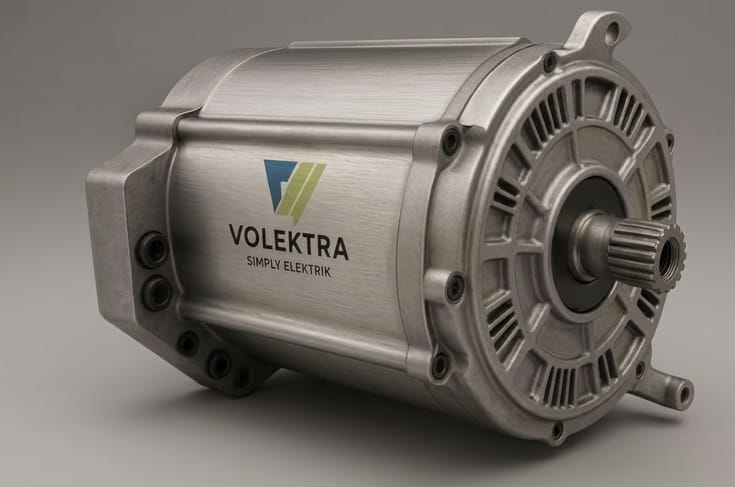
A motor that conjures its own magnets
Nearly every high-performance electric motor on the road today hides the same vulnerability: a rotor studded with permanent magnets made from rare-earth elements. Bengaluru's Vimag Labs has spent the last few years arguing that those magnets are optional — and this week it added a fifth Indian patent to back the claim.
The newly granted patent, titled "A Robust Rotating Transformer Excited Synchronous Motor and Its Control," covers the foundational architecture of the company's proprietary Virtual Magnet Synchronous Motor, or VMSM, platform. Vimag calls it India's first software-defined, magnet-free motor.
How you build a synchronous motor with no magnets
A conventional Permanent Magnet Synchronous Motor (PMSM) — the workhorse of electric two-wheelers, cars and industrial drives — relies on fixed rare-earth magnets embedded in the rotor to create a steady magnetic field. Vimag's VMSM throws that fixed field away. Instead, it generates and controls the rotor's magnetic field in real time using power electronics and a stack of proprietary control algorithms.
The result, the company says, is a brushless, slip-ring-free synchronous motor that matches or exceeds the performance of permanent-magnet designs — without any magnets at all. Because the field is created electronically rather than baked into hardware, it can in principle be tuned on the fly for efficiency, torque or thermal behaviour, turning a mechanical component into something closer to a software-defined one.
Why "magnet-free" is a strategic phrase
The engineering is interesting; the geopolitics is what makes it urgent. The rare-earth elements at the heart of permanent magnets — neodymium, dysprosium and their cousins — are overwhelmingly mined and processed in China, and recent export controls have turned that concentration into a live supply-chain risk for every carmaker outside it. For India, which is trying to build an electric-mobility industry on top of a supply chain it does not control, a high-performance motor that needs no rare-earth magnets is exactly the kind of import-substitution technology policymakers have been asking for.
That is the backdrop against which a patent grant — normally a quiet administrative milestone — becomes a talking point. Each grant hardens Vimag's claim to a design space that, if it scales, sidesteps one of the electric-vehicle industry's most exposed dependencies.
A portfolio, not a one-off
The fifth patent is part of a widening moat. Vimag says its intellectual-property portfolio now stands at five patents granted, ten more in the pipeline, and fifteen trademarks filed, spanning motor architecture, software controls, power electronics and application-specific implementations. The Accel-backed startup is running pilot projects with established two-wheeler and passenger-vehicle manufacturers and plans to push the technology up the power curve — into light commercial vehicles, heavier commercial vehicles and industrial systems rated from 200 kW to 600 kW.
There is a long road between a patent and a motor spinning inside a production vehicle, and magnet-free architectures have to prove they can match permanent-magnet designs not just on a test bench but on cost, reliability and manufacturability at volume. But in a year when rare-earth supply has moved from a footnote to a boardroom worry, a Bengaluru company quietly stacking patents on how to do without them is worth watching.
Sources
- ELE Times / Times Tech — Vimag Labs Secures Patent for India's First Software-Defined, Magnet-Free Motor Platform
- Electronics For You — Vimag Labs Secures Fifth India Patent For Magnet-Free Electric Motor Technology
- IndianWeb2 — Bengaluru's Vimag Labs Secures Patent for India's First Software-Defined, Magnet-Free Motor Platform
- BISinfotech — Vimag Labs Secures Patent for India's First Software-Defined, Magnet-Free Motor Platform