
TuTr Hyperloop's Materials Problem, and Why thyssenkrupp Just Signed On
TuTr Hyperloop signed a commercial MoU with thyssenkrupp at Bharat Innovates 2026. The deal targets the category's hardest bottleneck: manufacturing vacuum-tight, thermally stable steel-composite tubes at scale, not levitation.
Manik Gupta
Founder and editor of DeepTech India. Manik writes about India's frontier technology ecosystem — AI, semiconductors, space, quantum, robotics and biotech — translating research and policy into clear, reliable reporting.
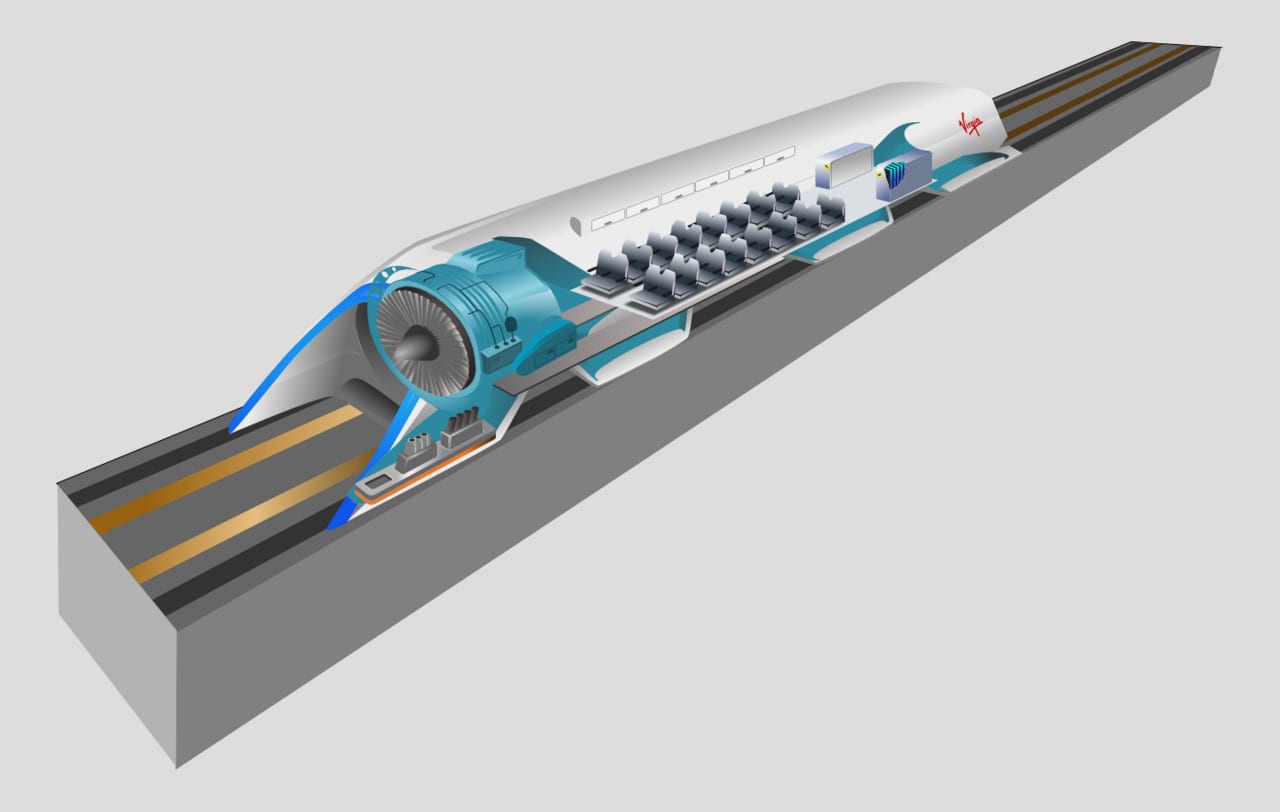
At Bharat Innovates 2026 (14-16 June), Chennai-based TuTr Hyperloop signed a commercial Memorandum of Understanding with thyssenkrupp, the German steel and industrial conglomerate. On paper it is one more MoU in a week thick with them. In engineering terms, it is the most consequential thing TuTr has done since it began building its 50-metre test track at IIT Madras — because the hardest unsolved problem in any hyperloop is not levitation, not propulsion, and not control. It is the tube. And the tube is a materials problem.
TuTr, incubated at IIT Madras and led by CEO R Balaji, is engineering a sub-700 km/h mass-transit system: autonomous magnetically levitated pods running inside steel tubes held at reduced pressure. The thyssenkrupp deal secures tier-1 European precision-manufacturing and metallurgical expertise, and it is explicitly aimed at getting TuTr from a 50 m proof of concept to a Phase-II 10 km commercial demonstrator. To understand why a propulsion startup needed a steelmaker, you have to understand what the vacuum is doing.
Why the tube exists: drag, and the Kantrowitz limit
Above roughly 300 km/h, the energy budget of any ground vehicle is dominated by a single term: aerodynamic drag, which scales with the square of velocity. A conventional high-speed train spends most of its traction power shoving a column of air out of the way. You cannot engineer that away with a better motor — it is set by the density of the air the train is moving through. So the hyperloop concept attacks the air itself, running pods inside tubes evacuated to a small fraction of sea-level pressure. Cut the air density and you cut the drag proportionally; at the target pressures, a pod needs only a fraction of the propulsion energy of commercial aviation to cruise at comparable speeds.
There is a subtler constraint, and it is the one that fixes the tube's geometry: the Kantrowitz limit. A pod moving through a tube is a blockage. The air ahead must either be pushed along by the pod or squeeze through the annular gap between the pod and the tube wall. As speed rises, the flow in that gap can choke — reach Mach 1 locally — at which point air piles up in front of the pod like a syringe plunger and drag spikes catastrophically. The limit is a function of the blockage ratio, the fraction of the tube's cross-section the pod occupies. The fix is to give the air room: a fat tube relative to a slim pod. TuTr's design uses a 2.23 m inner diameter tube with a 3.91 m² cross-section — sized so the pod stays comfortably below the Kantrowitz choke at cruise. Every centimetre of that diameter is steel that must be manufactured, sealed, and held round over kilometres.
The Q2-2026 problem: thermal expansion, stress, and vacuum integrity
Here is where the materials science bites. A hyperloop tube is, structurally, a very long, thin-walled pressure vessel — except the pressure differential points inward, so the failure mode is buckling, not bursting. It must hold near-vacuum continuously, against an atmosphere pressing in at roughly ten tonnes per square metre, while a multi-tonne pod traverses it at 700 km/h and induces moving mechanical loads.
Now add the sun. Steel has a coefficient of thermal expansion of about 12 parts per million per degree Celsius. A tube run that swings 40 °C between a winter night and a summer afternoon will try to change length by nearly half a metre per kilometre. Restrain that expansion and you generate enormous axial stress; allow it with expansion joints and you have introduced moving seals that must preserve vacuum integrity across millions of thermal cycles. This is the engineering TuTr has flagged as its Q2-2026 focus: managing extreme thermal expansion, mechanical stress, and vacuum integrity of steel-composite tubes over long distances. Pure steel is cheap and strong but expands and conducts heat; composites can be tuned for lower expansion and higher stiffness-to-weight but are harder to seal and join. The interesting work is in the steel-composite hybrid — and tuning alloy chemistry, wall architecture and joining methods to win on all three axes at once is precisely a metallurgy and precision-fabrication problem, not a software one.
Why Tata Steel, then thyssenkrupp
TuTr's instinct has been to bring the metallurgy in-house through partners rather than reinvent it. It already holds a Joint Development Agreement with Tata Steel covering composite alloys and structural engineering — the domestic supply of the tube material and the design of how it carries load. The thyssenkrupp MoU layers on top of that: tier-1 European precision-manufacturing and metallurgical depth, the kind of capability that turns a validated 50 m section into kilometres of dimensionally consistent, vacuum-tight tube. The pod and propulsion designs themselves remain in Phase-I validation on the 50 m test track at IIT Madras's Discovery Campus; the partnerships are explicitly about scaling the civil-and-tube layer to the Phase-II 10 km demonstrator. That sequencing matters. A hyperloop that levitates beautifully over 50 m but cannot field-join a leak-free tube over 10 km is a science project. The MoUs are TuTr buying its way out of that trap with established industrial metallurgy.
The investment case, and the honest caveats
The market framing is genuine but should be read with care. Per Coherent Market Insights and Technavio, hyperloop is projected at $5.98 billion in 2026, growing past $66 billion by 2033 — a compound trajectory that assumes the technology actually deploys at scale, which no operator has yet demonstrated commercially anywhere in the world. The unit-economics pitch is land and time: TuTr cites a connection compressing a 50-mile intercity commute to under 30 minutes while using 2-3x less land than conventional rail, because a slim elevated tube has a far smaller footprint than a ballasted twin-track corridor. In a land-constrained, right-of-way-expensive country, that footprint advantage is arguably the sharper part of the thesis than raw speed.
The moat, if one forms, is unlikely to be the pod. Maglev and linear motors are well-understood; the defensible IP and the genuine barrier to entry sit in the tube system — the metallurgy, the sealing, the thermal-management architecture, and the manufacturing know-how to produce it at length and at cost. That is exactly the layer TuTr is locking up through Tata Steel and now thyssenkrupp, which is the strategically literate read of these deals.
The risks are equally concrete. The leap from 50 m to 10 km is not linear: vacuum integrity, thermal cycling, joint fatigue and safety certification all scale non-linearly with distance, and an MoU is an intent, not a financed contract or a delivered tube. Capital intensity is severe, the regulatory pathway for a 700 km/h evacuated-tube passenger system in India is unwritten, and the entire category remains pre-revenue. For an investor, TuTr is a credible technical team attacking the correct bottleneck with the right partners — and a multi-year, materials-gated bet whose value will be proven or broken not on the test track, but on the first kilometre of tube that has to survive a summer.
Tags
More from Miscellaneous
Four Indian Ventures Join Google DeepMind’s AI for the Planet Cohort
Terrastack, Varaha Climate, Farmers for Forests and Climitra Carbon join the APAC programme, announced on 7 September.
CSIR’s Kolkata RISE Conclave Connects Four Labs With Industry
The September 6–7 programme linked minerals, medicine, materials and machinery. Its reported transfer initiatives need to be followed through to licensing, validation and production.