India's New 'Electrolyser-as-a-Service' Template Aims to Lower the Bar for Green Hydrogen
India's renewable energy ministry has released a standard 'Electrolyser-as-a-Service' model contract under the National Green Hydrogen Mission, letting industrial users buy green hydrogen from developer-owned, on-site electrolysers instead of investing in the hardware themselves — a bankability fix aimed at accelerating real-world adoption.
Manik Gupta
Founder and editor of DeepTech India. Manik writes about India's frontier technology ecosystem — AI, semiconductors, space, quantum, robotics and biotech — translating research and policy into clear, reliable reporting.
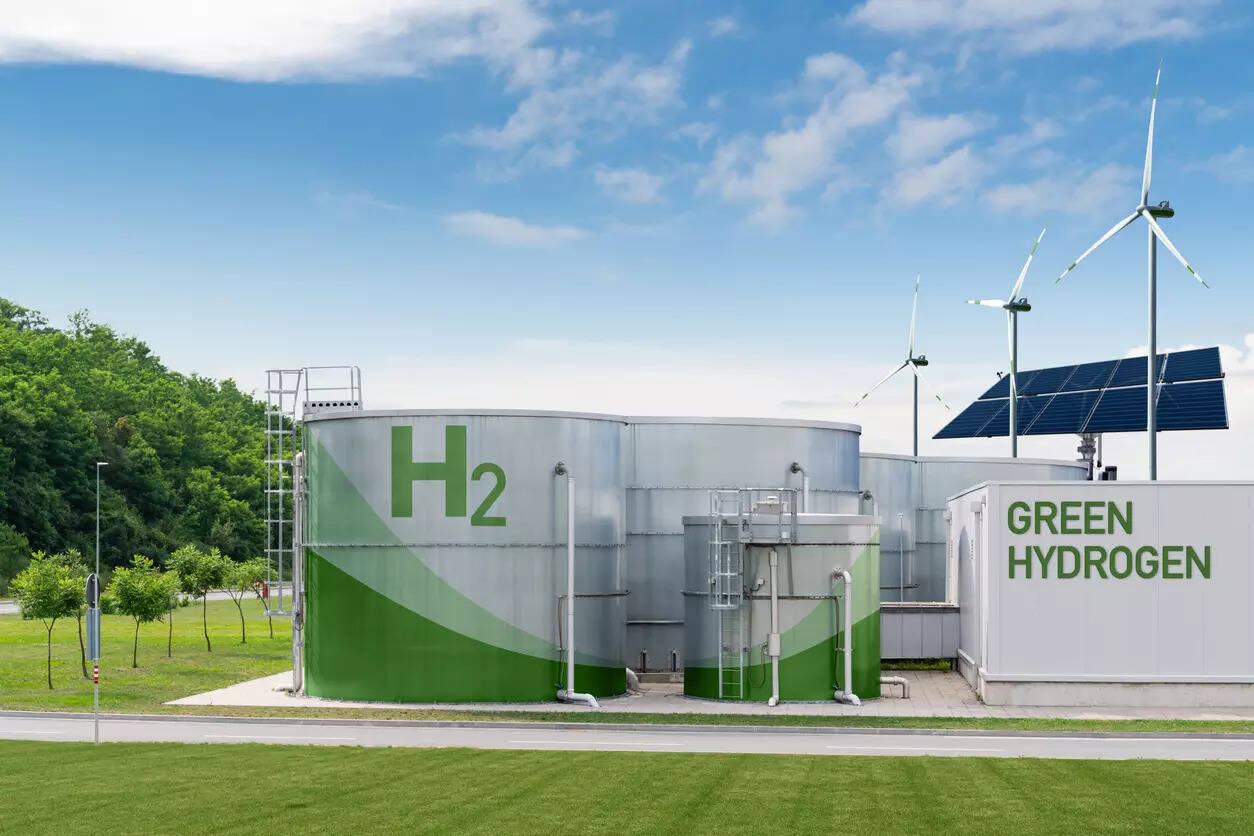
On 27 July 2026, the Ministry of New and Renewable Energy (MNRE) released a model service agreement for "Electrolyser as a Service" (EaaS) under the National Green Hydrogen Mission. It is a piece of contract paperwork rather than a factory or a funding announcement — but for an industry stuck between ambitious targets and slow real-world adoption, a standard template can matter more than another subsidy.
The problem the template is trying to solve
India's green hydrogen ambitions are large. The National Green Hydrogen Mission, launched in 2023 with an outlay of ₹19,744 crore, targets around five million tonnes of annual green hydrogen production by 2030, with incentives for both electrolyser manufacturing and hydrogen output flowing through the SIGHT programme (Strategic Interventions for Green Hydrogen Transition).
The friction is on the demand side. For a fertiliser plant, refinery or steelmaker, switching to green hydrogen means buying and operating an electrolyser — a capital-heavy, unfamiliar piece of kit — and then running it reliably for years. That upfront cost and operating risk is a powerful reason to keep using cheaper grey hydrogen made from natural gas. Many potential industrial users simply do not want to become electrolyser operators.
What Electrolyser-as-a-Service changes
The EaaS model reframes the electrolyser as a service rather than an asset. Under a build-own-operate arrangement, a technology developer sets up, owns and operates the electrolyser plant on the industrial consumer's premises. The consumer does not invest in the production hardware at all — it simply buys the hydrogen (and oxygen) produced, while the service provider stays responsible for owning, running and maintaining the plant.
That is a familiar pattern from the solar and, increasingly, the battery-storage worlds, where "as-a-service" and power-purchase-style contracts unlocked adoption by shifting capital cost and performance risk onto specialist developers. Applying it to electrolysers is a sensible attempt to do the same for green hydrogen.
What is actually in the model agreement
MNRE's template is designed to save every project from renegotiating the same terms from scratch. Its headline provisions include:
- A 15-year operating period, beginning after the plant passes a performance guarantee test — long enough to underwrite the developer's investment.
- A fixed monthly payment covering equipment leasing and operating costs, with annual revisions linked to the consumer price index to account for inflation.
- Defined performance standards for hydrogen output, product purity, energy consumption and plant availability — with incentives for beating them and penalties for falling short.
By standardising these clauses, the framework aims to simplify negotiations, cut transaction costs and improve the ease of doing business for developers and industrial off-takers alike. The government is not mandating the model; it is lowering the friction for parties who want to use it.
Why it is a deep-tech story, not just a policy one
It is tempting to file a model contract under bureaucracy. But the binding constraint on India's hydrogen transition is rarely the electrolyser technology itself — it is bankability. Financiers need predictable, standardised cash flows to lend against; developers need a repeatable deal structure to build a pipeline; and industrial users need a way to decarbonise without taking on unfamiliar operational risk. A well-drafted, widely adopted template does more to move gigawatts than a marginal tariff tweak, because it makes each individual project faster to close and easier to finance.
Early movers are already testing the approach: developers and industrial consumers have begun signing multi-year EaaS-style agreements for on-site electrolysers, with options to scale capacity as demand grows. If the MNRE template becomes the default reference for such deals, it could quietly accelerate the shift from pilot projects to production hydrogen across Indian industry.
The bottom line
Green hydrogen in India has never been short of targets or headline investment commitments. What it has lacked is a low-friction path for ordinary industrial buyers to actually consume the stuff. Electrolyser-as-a-Service, backed by a government-blessed model contract, is a modest but genuinely useful step towards closing that gap — turning a clean-energy aspiration into something a plant manager can sign for.
Sources
Tags
More from Energy Tech
Magna Doubles Down on Yuma Energy With $35 Million to Scale India's Battery-Swapping Network
Automotive supplier Magna International has put a further $35 million into Yuma Energy, the battery-swapping venture it co-founded with Yulu, to expand the network past 60 million swaps.
India Weighs a ₹13,000 Crore Push to Build the Battery Materials It Still Imports From China
A proposed incentive scheme would target anode, cathode, electrolyte, separator and copper-foil manufacturing — the upstream layer India's battery gigafactories still depend on Chinese suppliers for.