Matel Raises ₹130 Crore to Scale Magnet-Free Motors and EV Powertrains
Pune-based Matel Motion & Energy Solutions has raised ₹130 crore in a Series B led by UC Impower to expand manufacturing of its energy-efficient, magnet-free motors and EV powertrains and to enter the electric commercial-vehicle market.
Manik Gupta
Founder and editor of DeepTech India. Manik writes about India's frontier technology ecosystem — AI, semiconductors, space, quantum, robotics and biotech — translating research and policy into clear, reliable reporting.
A ₹130-crore round for the unglamorous heart of the EV
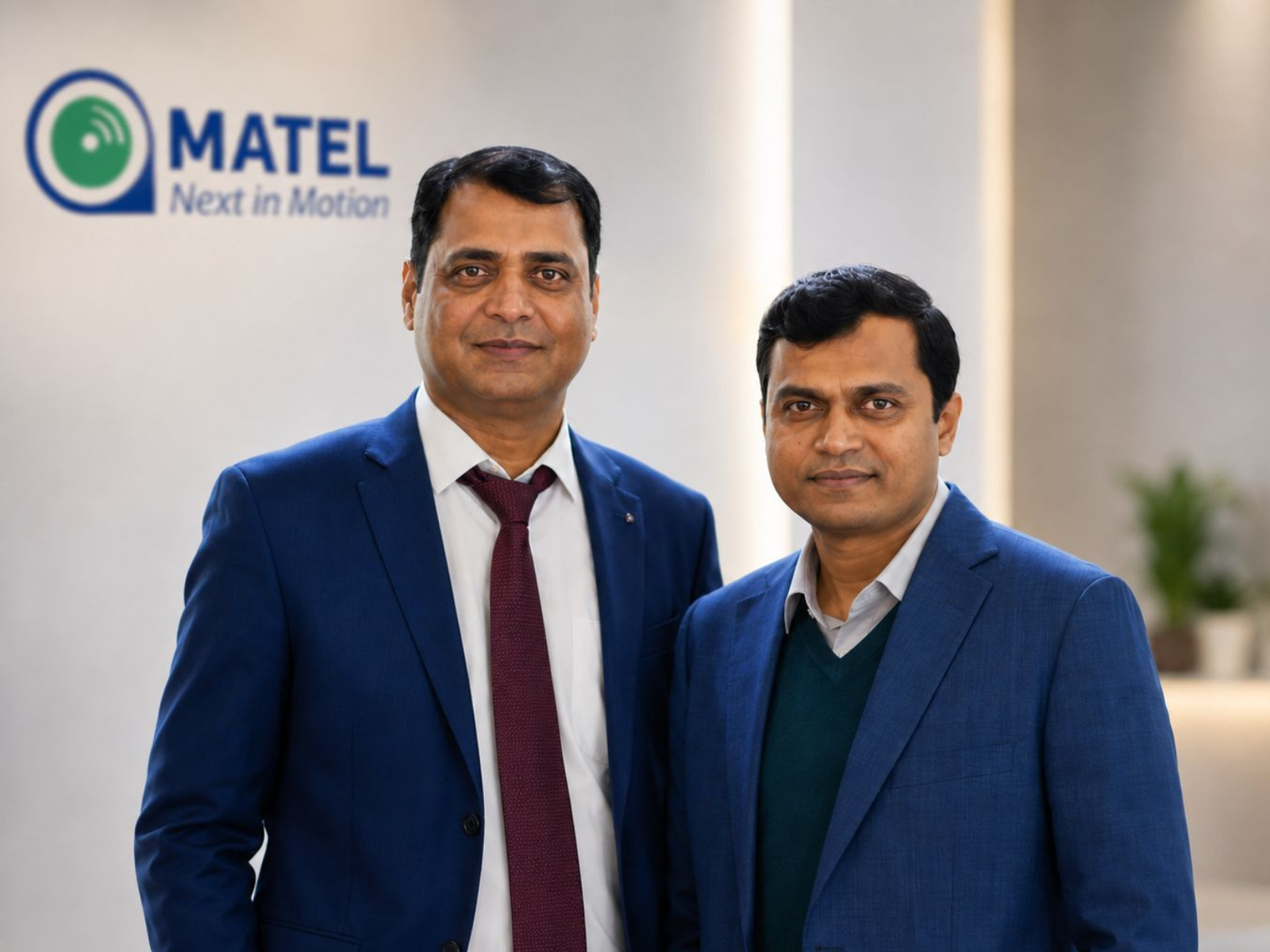
Pune-based Matel Motion & Energy Solutions has raised ₹130 crore — about $15 million — in a Series B round led by early-growth investor UC Impower. Catamaran, the family office founded by Infosys co-founder N. R. Narayana Murthy, joined as a new backer, while existing investor Transition VC also participated.
Founded in 2017, Matel designs and manufactures the components that actually turn electricity into motion: energy-efficient motors, motor controllers and integrated powertrains for automotive and industrial use, spanning electric vehicles, pumping equipment and cooling systems. It is exactly the kind of unglamorous, hard-to-build hardware that India has long imported and is now trying to make at home.
Motors without rare-earth magnets
Matel's technology pitch rests on two ideas. The first is efficiency: the company builds permanent-magnet synchronous motors rated to IE5, the highest efficiency class in the international standard for industrial motors, which wastes less energy as heat and squeezes more work out of every unit of electricity.
The second, and strategically more interesting, is its magnet-free motor technology. Conventional high-performance motors depend on permanent magnets made from rare-earth elements — a supply chain dominated by China and vulnerable to export controls. Motor designs that deliver comparable performance without those magnets sidestep that dependency altogether. For an India trying to localise its EV supply chain and insulate it from geopolitical shocks, a home-grown magnet-free motor is more than an engineering curiosity.
Where the money goes
Matel plans to use the capital to expand manufacturing capacity, strengthen research and development, accelerate product development and hire. It also intends to broaden its product portfolio, push into the electric commercial-vehicle segment — trucks and larger vehicles, where powertrain demands are heavier — and expand internationally.
The round lands at a moment when India's EV story is shifting from assembling vehicles to owning the technology inside them. Batteries attract most of the attention and capital, but the motor and its power electronics determine how efficiently a vehicle uses the energy those batteries store. Backing a components specialist rather than a vehicle brand is a bet that the durable value in electric mobility sits in this deeper layer of the stack.
A crowded but strategic niche
Matel is not alone; a clutch of Indian startups is chasing the same goal of efficient, indigenously designed motors, several of them working on magnet-free or reduced-magnet designs. That competition reflects how central the technology has become to the country's twin ambitions of decarbonising transport and reducing its reliance on imported critical materials.
For its backers, the appeal is a manufacturer with real products, industrial as well as automotive customers, and a technology roadmap pointed at exactly the bottlenecks — efficiency and rare-earth dependence — that India's policymakers are most anxious to solve. Whether Matel can scale manufacturing fast enough to hold its lead is the test the ₹130 crore is meant to fund.
Sources
Tags
More from Energy Tech
Magna Doubles Down on Yuma Energy With $35 Million to Scale India's Battery-Swapping Network
Automotive supplier Magna International has put a further $35 million into Yuma Energy, the battery-swapping venture it co-founded with Yulu, to expand the network past 60 million swaps.
India Weighs a ₹13,000 Crore Push to Build the Battery Materials It Still Imports From China
A proposed incentive scheme would target anode, cathode, electrolyte, separator and copper-foil manufacturing — the upstream layer India's battery gigafactories still depend on Chinese suppliers for.