Kerala's Graphene Bet: India's First State Graphene Policy
Kerala approved India's first comprehensive graphene policy, backing an industrial park in Palakkad and subsidies to build a domestic graphene cluster, an attempt to close India's lab-to-fab gap in advanced carbon materials.
Kerala has become the first Indian state to approve a comprehensive graphene policy, a deliberate attempt to turn India's strength in carbon-materials research into an actual industry. Cleared by the state cabinet around 13 February 2026 and set to take effect in April, the policy, championed by Industries Minister P. Rajeev, backs a graphene industrial park in Palakkad, a ₹200 crore Digital Innovation Centre, and a 50% subsidy on lease payments in government parks. Reported allocations include roughly ₹237 crore for a graphene production park and about ₹94.85 crore for a "Graphene Aurora" scheme, with the state courting research tie-ups with Oxford and Manchester.
Why graphene, and why a policy
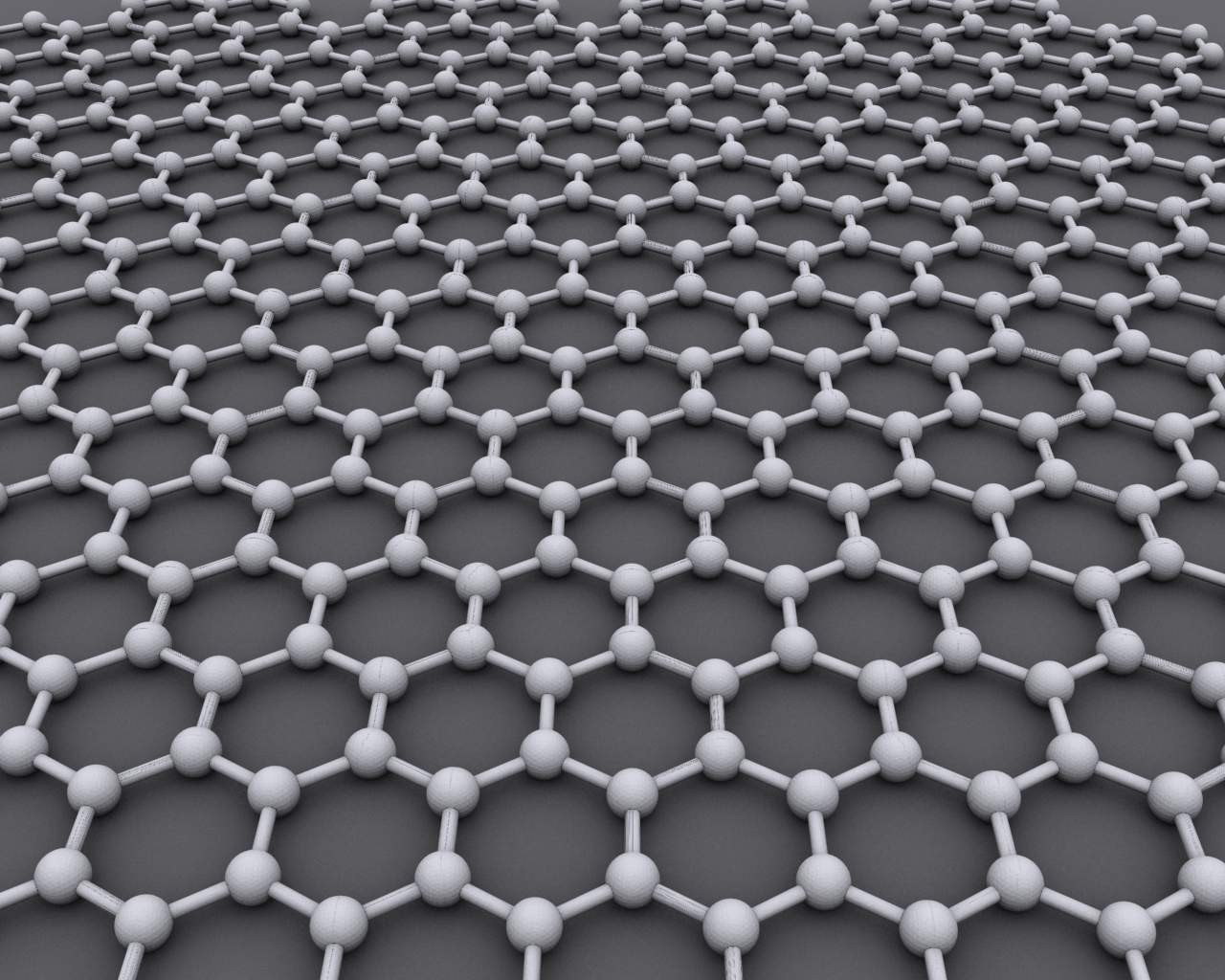
Graphene is a single layer of carbon atoms arranged in a hexagonal lattice, and it has spent more than a decade as materials science's most hyped substance, for good reason. It is extraordinarily strong, light, flexible and electrically conductive, with credible potential uses in batteries and supercapacitors, sensors, composites, anti-corrosion coatings, water filtration and electronics. The science is genuine; the commercial reality has lagged the promise for years, in India and everywhere else.
India in particular does a respectable amount of graphene research. What it does not do is make much graphene. That is the lab-to-fab gap, the chasm between publishing papers and running production lines, and it is why most advanced carbon materials used in Indian industry are imported. Closing that gap is not primarily a research problem; it is an industrial one, about plants, supply chains, standards and buyers.
A state industrial policy is an unusual but coherent tool for that job. Rather than fund more research, Kerala is trying to assemble the other half of an industry: an anchor park, capital subsidies and a cluster where producers, equipment suppliers and buyers can co-locate and feed off one another. It is the same cluster logic India has used to bootstrap electronics manufacturing and semiconductor assembly, now applied to nanomaterials. The 50% lease subsidy and the dedicated production park are aimed squarely at lowering the cost and risk of being the first manufacturers to set up.
What Kerala is building on
The policy does not start from nothing. It builds on existing groundwork in the state, including the India Innovation Centre for Graphene in Kochi, established with Tata Steel, C-MET and Digital University Kerala to bridge research and application. Kerala has been quietly positioning itself as India's graphene hub for a few years, and the new policy is an attempt to formalise and accelerate that with statutory incentives and a clear industrial-park anchor. Courting tie-ups with Oxford and Manchester, the latter being where graphene was first isolated, is partly about credibility and partly about access to know-how the domestic ecosystem still lacks.
The ecosystem, and a cautionary note
The policy also lands amid genuine momentum in Indian carbon materials more broadly. CSIR-NEIST in Assam has shown it can beneficiate India's own low-grade graphite into graphene oxide, attacking the dependency at the feedstock level, and the GraphIN 2026 conference in Kochi, opened by Nobel laureate Konstantin Novoselov, showcased graphene biosensors and wearables built on Indian work. There is a real, if young, community to build on.
But there is a warning sign worth heeding in the same breath. Log9 Materials, one of India's most celebrated graphene and battery-materials startups, was sent into insolvency in late 2025 over a relatively small default, despite years of acclaim and funding. It is a sharp reminder that deep-tech materials is capital-hungry and cash-flow-brutal, that scientific promise does not pay creditors, and that the journey from a remarkable material to a profitable product is where most graphene ventures, worldwide, have foundered. A cluster policy has to be designed around exactly that risk, ensuring there is real demand and patient capital, not just subsidised floor space.
The honest caveats are several. A policy is a statement of intent, not a delivered industry; graphene has over-promised globally for more than a decade, and "miracle material" enthusiasm has burned investors before; and the headline allocations vary across sources, which is common for freshly announced schemes still being detailed. The real test is whether anchor investors and genuine offtake, customers actually buying graphene-enhanced products, materialise. But the underlying bet is sound: India has the research, it has domestic graphite, and now, in at least one state, it has the industrial policy. The question that will decide it is whether Kerala can convert those ingredients into manufacturing before the global window closes and the opportunity is captured elsewhere.