113 Patents from Kashmir: IUST and the Decentralisation of Indian Deep Tech
IUST Awantipora reported a 113-patent portfolio spanning doped ceramic adsorbents, solar thermal storage and healthcare robotics, backed by ₹107.61cr in funding — evidence that India's deep-tech IP is decentralising beyond the IITs.
Manik Gupta
Founder and editor of DeepTech India. Manik writes about India's frontier technology ecosystem — AI, semiconductors, space, quantum, robotics and biotech — translating research and policy into clear, reliable reporting.
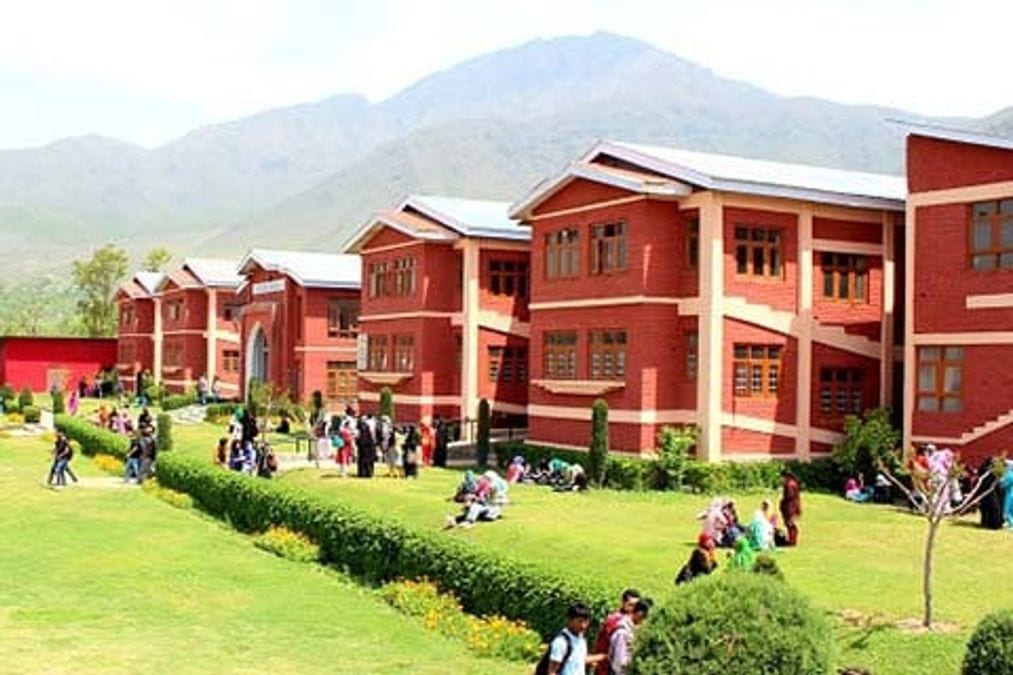
India's deep-tech IP has long been read as a story about the IITs. A quieter data point from Awantipora complicates that map. At a June 2026 Research Advisory Council meeting, the Islamic University of Science and Technology (IUST) reported a portfolio of 113 patents — 39 fully granted — spanning environmental engineering, smart-energy systems and healthcare robotics. Timed to coincide with Bharat Innovates 2026, the disclosure is less interesting as a headline than as evidence that high-end materials and robotics IP is forming, and maturing, well outside the established network.
The technical span: adsorbents, thermal storage, respirators
The portfolio's anchor is in environmental engineering: low-cost ceramic adsorbents for removing heavy-metal ions from industrial wastewater. The mechanism is worth stating precisely, because it is where the engineering lives. The material is synthesised with specific metallurgical doping — introducing controlled quantities of foreign cations into the ceramic lattice — to engineer a highly porous nanostructure with large internal surface area and an abundance of active sites. Dissolved heavy-metal ions are then captured by adsorption onto those sites, the contaminant binding to the pore walls as wastewater flows through. The claimed advantage over conventional activated-carbon filtration is throughput: a higher volume of water treated per unit of media, which is the variable that actually governs operating cost at industrial scale. Carbon works, but its capacity saturates and regeneration is expensive; a doped ceramic engineered for fast, high-capacity uptake changes the unit economics of compliance for a polluting mill.
The rest of the span is coherent with that applied-engineering posture. IUST lists advanced smart systems including autonomous solar-powered thermal-storage mechanisms — storing collected solar energy as heat for later use without grid dependence — and a cluster of healthcare robotics: rapid-deployment, low-cost ventilator prototypes and powered air-purifying respirators (PAPRs). These are not exotic. They are deliberately manufacturable, cost-sensitive devices aimed at problems a regional manufacturer could actually build and sell.
Why this is a decentralisation signal, not a vanity metric
A patent count alone is cheap; the structure around it is what makes IUST credible. Concurrent with Bharat Innovates 2026, the university verified over ₹107.61 crore in secured extramural research funding, ₹81.13 crore of live projects, and a ₹358 crore proposal pipeline — and, critically, it has organised this to move granted patents into commercial licensing with regional manufacturers rather than letting them sit on a shelf. That translation layer, from grant to licence to local production, is precisely what most of the Indian academy lacks and what separates an IP portfolio from a research vanity exercise.
The research base is real too. Under Vice-Chancellor Prof. Shakil A. Romshoo, IUST has produced 1,831 Scopus-indexed publications and over 31,000 citations since 2019, per the university's release and Greater Kashmir. The investment-relevant reading is structural. For a deep-tech ecosystem to compound, capable IP-generating institutions cannot remain concentrated in a handful of metros; they have to decentralise into regional centres of excellence with their own funding, their own labs, and their own commercialisation pathways. IUST is a working instance of that thesis — granted patents in adsorbent chemistry and healthcare robotics, a nine-figure funding base, and a stated route to regional licensing. The honest caveats apply: granted patents are not the same as licensed revenue, and a proposal pipeline is not yet money in hand. But the direction of travel is the point. The next defensible advanced-materials or robotics company in India may not come from where the map says it should.
Tags
More from Miscellaneous
Four Indian Ventures Join Google DeepMind’s AI for the Planet Cohort
Terrastack, Varaha Climate, Farmers for Forests and Climitra Carbon join the APAC programme, announced on 7 September.
CSIR’s Kolkata RISE Conclave Connects Four Labs With Industry
The September 6–7 programme linked minerals, medicine, materials and machinery. Its reported transfer initiatives need to be followed through to licensing, validation and production.