India's Packaging Cluster Goes Live: Micron, Kaynes, CG Power and Tata's Assam Giant
Before a single domestic wafer is fabricated, four ATMP projects have moved India to shipping product, with Kaynes exporting the first indigenously advanced-packaged chips and Tata's ₹27,000 crore Assam plant set to be the country's largest.
Manik Gupta
Founder and editor of DeepTech India. Manik writes about India's frontier technology ecosystem — AI, semiconductors, space, quantum, robotics and biotech — translating research and policy into clear, reliable reporting.
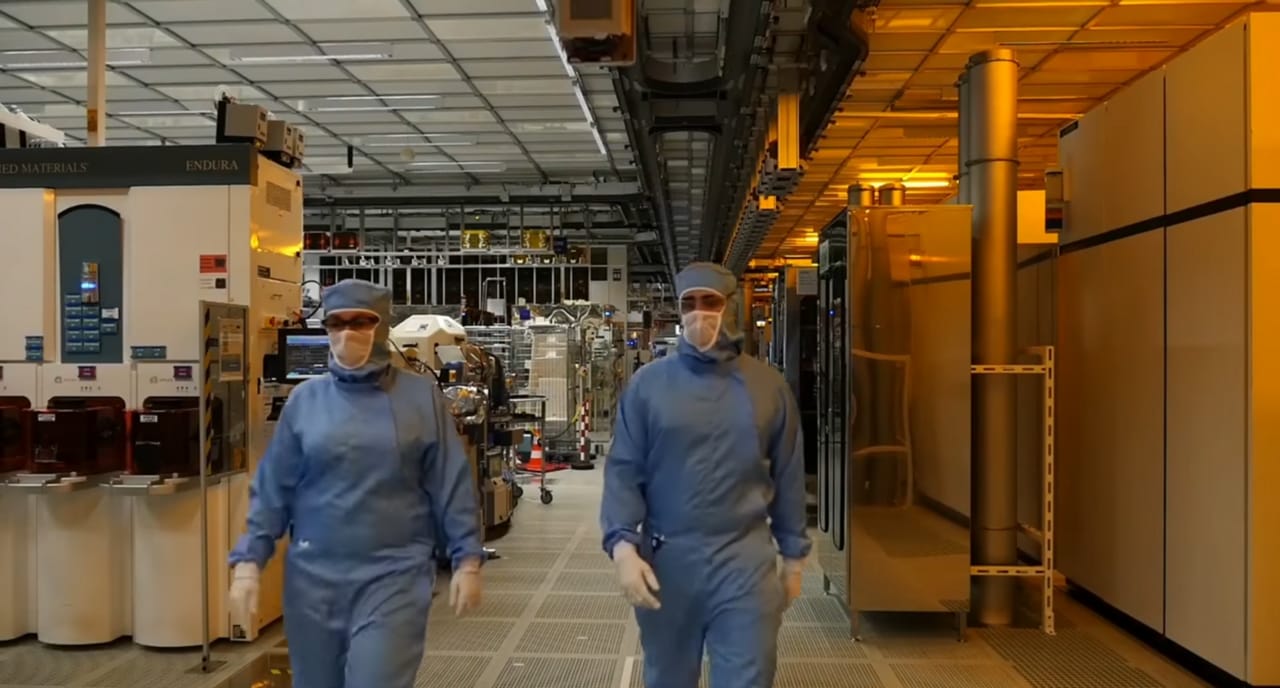
India's semiconductor story in 2026 did not begin in a fab. It began in a packaging plant. Before a single domestic wafer is fabricated at Dholera, four assembly, test, marking and packaging (ATMP) projects have moved India from policy slideware to shipping product. The first commercial chip facility, Micron's Sanand unit, was inaugurated by the Prime Minister on 28 February 2026. A month later, a second plant began packaging chips. By mid-2026 the contours of a genuine packaging cluster, concentrated in Gujarat with an outlier giant rising in Assam, were visible. For investors, this is the part of the value chain that is real, revenue-generating, and accessible through listed proxies today.
Why packaging is the rational entry point
Chipmaking has three broad stages: design (fabless), front-end fabrication (the fab), and back-end packaging and test (OSAT/ATMP). The back end is where bare silicon dies are cut from wafers, mounted, interconnected, encapsulated, tested and marked into the finished components that go onto circuit boards. It is less capital-intensive than a fab, the technology transfer is more tractable, and crucially the value added by advanced packaging is rising as transistor scaling slows. When you can no longer shrink the transistor cheaply, you extract performance by how you connect and stack dies, through flip-chip, wire-bond, and integrated system packaging techniques. India entering at the back end is therefore not a consolation prize; it is the layer where capability can be stood up fastest and where global demand for non-China capacity is most acute.
The geopolitics reinforce the economics. The bulk of the world's OSAT capacity is concentrated in Taiwan and China, and customers in the United States, Europe and Japan have spent the post-2021 period actively seeking a second geography to de-risk that dependence. India is a credible candidate: it has the engineering labour, the policy subsidy, and now anchor tenants. The window to win that diversification spend is open precisely because back-end capacity is being re-sourced globally, and a plant that can demonstrate qualified, exportable output captures it. That is why the first indigenous advanced-packaging export, described below, carries weight disproportionate to its dollar value.
Micron Sanand: the anchor
Micron's facility carries a total project value of ₹22,516 crore, of which Micron's phase-one investment is roughly $825 million, with the balance covered by central and state incentives. The plant packages DRAM and NAND memory, taking dies produced in Micron's overseas fabs and assembling them into the memory modules and ball-grid-array packages that the company sells worldwide. It does not fabricate memory in India. That distinction matters for expectation-setting, but the facility's significance is that it is the first commercial semiconductor plant of any kind on Indian soil, it validated the ISM incentive structure for a marquee multinational, and it seeded Sanand as the country's packaging hub.
Kaynes Semicon and the first export
The second operational unit, Kaynes Semicon's Sanand OSAT, inaugurated by the Prime Minister on 31 March 2026, produced the milestone that should interest investors most. Kaynes packaged and shipped roughly 900 Intelligent Power Modules (IPMs) to Alpha & Omega Semiconductor in California, in what the firm characterises as India's first export of indigenously advanced-packaged chips.
The technical content is the point. An Intelligent Power Module is not a single die in a simple package. Each of these units integrates 17 dies, combining power switching transistors with gate-driver and protection logic in one multi-chip module. Assembling a 17-die module to the thermal, electrical and reliability standards a US semiconductor customer will accept is a meaningful demonstration of process control, not a token shipment. The plant carries an investment of ₹3,300 crore and is guided toward a capacity of 6 million chips per day. Kaynes Technology, the listed parent, gives public-market investors direct, if early, exposure to this ramp.
CG Power and the Assam giant
The cluster's third Gujarat node is the CG Power, Renesas and Stars Microelectronics joint venture at Sanand, a ₹7,600 crore OSAT with a first pilot chip targeted for mid-2026 and a build-out toward 15 million units per day. The structure is instructive: Renesas, a major Japanese automotive semiconductor supplier, brings both packaging technology and, importantly, captive offtake, which de-risks utilisation in a way that merchant capacity cannot. CG Power, listed in India, is the second public proxy in this group.
The largest bet sits outside Gujarat. Tata's TSAT facility in Assam (Morigaon, near Jagiroad) carries an investment of ₹27,000 crore (about $2.83 billion) and is guided to 48 million chips per day, which would make it India's largest packaging plant. It will run wire-bond, flip-chip and integrated system packaging on one site, spanning the spectrum from low-cost legacy interconnect to advanced techniques. Wire-bond connects die pads to the package lead frame with fine metal wires, an established and cost-effective method for many devices; flip-chip inverts the die and bonds it directly through solder bumps for higher I/O density and better electrical and thermal performance. Running both lets TSAT address everything from commodity components to higher-value parts. Beyond capacity, the plant matters as the first semiconductor anchor in India's Northeast, a region with no prior electronics manufacturing base, and is projected to support around 15,000 jobs.
The investor view: real revenue, honest risks
The reason this cluster deserves attention is that it is operational. Unlike a fab still pouring concrete, two of these plants are inaugurated and one is exporting. That converts the Indian semiconductor thesis from a multi-year option into something with near-term volumes, and it gives investors two listed names, Kaynes Technology and CG Power, through which to take a position rather than waiting for a private fab to reach yield.
The caveats are specific. OSAT is a margin-thin, scale-dependent business; profitability comes from utilisation and test throughput, and ramp curves on new lines are gradual. Several of the headline capacity figures, 6 million, 15 million and 48 million chips per day, are guided run-rate targets at maturity, not current output, and should be read as destinations rather than present numbers. Captive offtake (Micron's own memory, Renesas's automotive parts) cushions some plants; merchant capacity will have to win customers in a competitive global back-end market where Taiwan, China and Southeast Asia hold incumbency.
What has nonetheless changed is the base case. India now packages chips, exports an advanced multi-die module, and has the spine of a back-end cluster forming across two regions. Front-end fabrication is the harder, later prize. The packaging layer is the one that arrived first, and it arrived shipping product.
Tags
More from Semiconductors
SEMICON India 2026 Opens in Delhi With Modi Inaugurating, 600+ Exhibitors
SEMICON India 2026, the fifth edition of the country's flagship chip-industry event, opens in New Delhi on September 17 with Prime Minister Modi inaugurating and more than 600 exhibitors taking part.
CDIL Confirms Commercial Chip Production, Partners With Japan's Shindengen on Packaging
Continental Device India Ltd (CDIL), one of India's oldest chipmakers, confirmed commercial-scale semiconductor production and a new packaging partnership with Japan's Shindengen Electric at SEMICON India 2026.