
HyperVerge Introduces AI Agents to Assist Business-Loan Underwriting
Three agents assemble financial records, support video discussions and screen businesses. Company-reported pilot gains need to be judged alongside errors and human review.
Manik Gupta
Founder and editor of DeepTech India. Manik writes about India's frontier technology ecosystem — AI, semiconductors, space, quantum, robotics and biotech — translating research and policy into clear, reliable reporting.
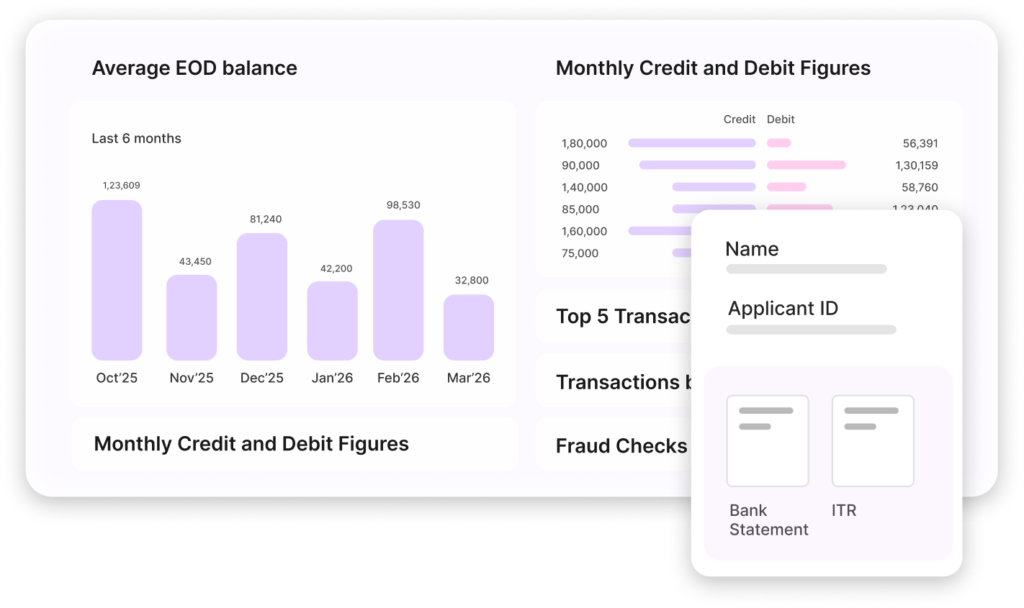
HyperVerge’s September 9 launch targets the preparation of a business-loan file: gathering financial information, assisting applicant discussions and checking the business behind an application. Final decisions on complex loans remain with people, according to cofounder and chief executive Kedar Kulkarni.
In an ET AI interview, the company described three agents covering financial documents, video-based personal discussions, and checks against corporate, litigation and sanctions records.
What the early evidence says
HyperVerge reported trials with about ten mid-sized lenders and production use of its video-discussion agent at three. It also reported shorter preparation times in pilots. These are company statements, not an independent evaluation of loan quality.
Kulkarni described source-linked flags and an audit trail, with lenders comparing outputs against existing workflows before expanding use. That gives a clearer picture of the intended deployment than a claim that AI simply replaces underwriting.
Why it matters
The difficult test is whether an underwriter can reliably reconstruct how a flag was produced. A wrong association between two people with similar names could be more consequential than a slow search. A summary that looks complete but omits a material document could move a file faster while weakening the decision.
A useful evaluation would measure omissions and false flags as well as turnaround time. It would show how often reviewers override the system, how disputes are handled and whether performance holds across different document formats and borrower groups.
These are proposed evaluation criteria, not reported product results. The material reviewed does not establish that automated preparation improves repayment outcomes or gives every applicant fairer access.
The product’s promise is a more usable evidence file for the person making the decision. Demonstrating that promise requires both efficiency and a traceable account of mistakes.
Image: HyperVerge’s official underwriting dashboard illustration; displayed data are examples.
Tags
More from Artificial Intelligence
Avathon and IIT Roorkee Plan a Physical AI Research Lab
The proposed Physical AI Lab will connect academic work on optimisation and autonomous systems with industrial problems. Its research agenda is announced; operational readiness and deployment results are not.
Mahindra Finance Reports More Than One Crore Voice-AI Calls
Mahindra Finance says voice agents built by Mahindra AI on Sarvam’s platform have handled over one crore calls across 12 languages. The next test is how reliably those conversations help customers and staff.