Dholera: Inside India's First Commercial Wafer Fab
Tata Electronics and Taiwan's PSMC are building India's first greenfield 300mm fab at Dholera, a ₹91,000 crore bet on mature-node silicon de-risked by a 50% ISM subsidy and aimed at ending total wafer-import dependence.
Manik Gupta
Founder and editor of DeepTech India. Manik writes about India's frontier technology ecosystem — AI, semiconductors, space, quantum, robotics and biotech — translating research and policy into clear, reliable reporting.
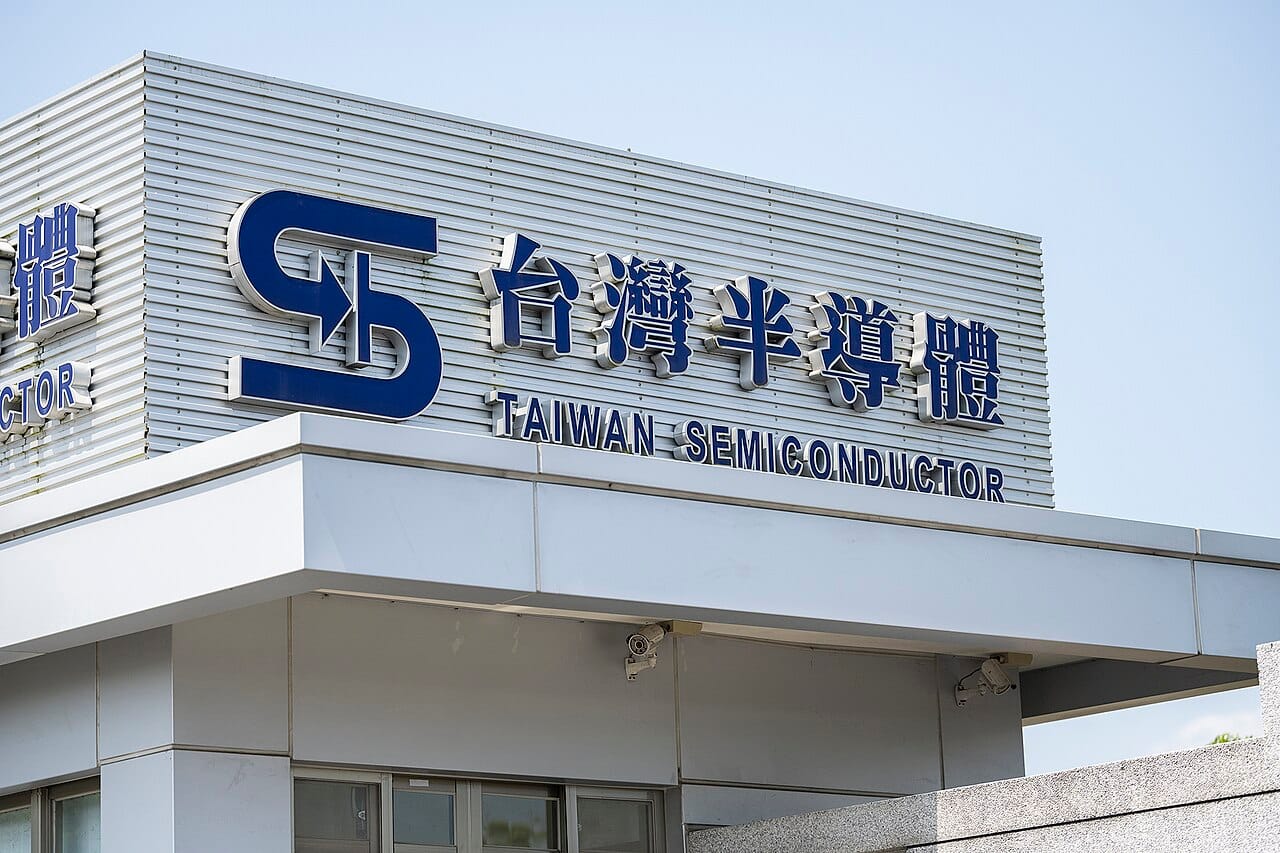
On a salt-flat plain south of Ahmedabad, Tata Electronics and Taiwan's Powerchip Semiconductor Manufacturing Corp (PSMC) are erecting what India has not had in five decades of trying: a commercial wafer fabrication plant. The Dholera fab, sited in the Dholera Special Investment Region in Gujarat, is a greenfield 300mm facility carrying a sanctioned outlay of roughly ₹91,000 crore (about $11 billion). By the company's account, civil construction reached the 45-50% mark around mid-2026, with first silicon and pilot runs targeted for late 2026. For a country that today imports essentially 100% of its wafers, the symbolism is large. The economics are larger.
Why mature nodes, not the bleeding edge
The instinctive critique of any new fab is that it is not building the most advanced process. Dholera will run at 28 to 110 nanometres rather than the 3nm and 2nm geometries that dominate headlines from TSMC and Samsung. This is not a shortfall; it is the strategy.
Process nodes below 10nm are economically rational only for a narrow band of products: leading-edge mobile application processors, GPUs, and high-density logic, where the cost of a new EUV-equipped fab (north of $20 billion) is amortised across enormous volumes. The rest of the semiconductor economy runs on mature and legacy nodes. Power management ICs (PMICs) that regulate voltage in every phone and vehicle, display driver ICs, microcontrollers (MCUs) for industrial and automotive control, and analog and mixed-signal logic almost all live in the 28-110nm range. These devices do not benefit from transistor shrinks the way a CPU does. They benefit from reliability, supply security, and price.
The demand structure favours this choice. Automotive electronics, industrial automation, and telecom infrastructure are growing consumers of exactly these parts, and the 2021-2022 shortage demonstrated that a stalled supply of a sub-dollar MCU can idle a multi-thousand-dollar car assembly line. Dholera's planned output of 50,000 wafers per month is therefore aimed at the highest-volume, most chronically supply-constrained segment of the market, where a domestic source has tangible strategic value to Indian automakers, defence, and electronics manufacturers.
The technology and the partners
PSMC brings the process. A pure-play Taiwanese foundry specialising in mature-node and specialty logic, PSMC is the technology transfer partner, licensing the process recipes, yield-learning, and operational playbook that a first-time fab operator cannot develop from scratch. Tata Electronics supplies the capital, the construction, and the workforce build-out, taking the operator role that it intends to extend across its packaging and assembly investments.
The equipment chain is where a fab's capability is actually set. Tata has signed a memorandum of understanding with ASML, the Dutch monopoly supplier of lithography systems, for the patterning tools. At 28-110nm, the relevant machines are deep-ultraviolet (DUV) immersion and dry scanners rather than the far costlier EUV systems reserved for advanced nodes, which keeps tool capex proportionate to the node. Alongside lithography sit deposition, etch, ion implantation, chemical-mechanical planarisation, and metrology tools, the bulk of which today come from a handful of suppliers including Applied Materials, Lam Research, and Tokyo Electron. Localising even a fraction of that equipment and materials supply chain around Dholera is a second-order prize that policy is explicitly chasing.
The subsidy maths and the jobs
The single most important number for an investor is not the headline capex. It is the subsidy. Under the India Semiconductor Mission (ISM), the central government covers 50% of eligible project cost for an approved fab, with participating states typically layering further incentives on land, power, and water. On a ₹91,000 crore project, a 50% fiscal share fundamentally rewrites the return profile, halving the effective private capital at risk and bringing the cost-of-capital hurdle for a greenfield Indian fab closer to that of an established node fab abroad.
This matters because mature-node foundry economics are thin. Margins are made on utilisation and yield over very long asset lives, not on pricing power. A new entrant competing against fully depreciated fabs in Taiwan and China would, unsubsidised, struggle to clear its cost of capital. The 50% grant is precisely the instrument that closes that gap and explains why the project is viable in the first place. The flip side is the dependency: the thesis is underwritten by the state, and any dilution of ISM disbursement schedules or terms would flow straight to project IRR.
On employment, the project is guided to create more than 20,000 jobs, split between direct fab operations and the construction and ancillary ecosystem. The deeper value is human capital. A working fab trains a generation of process, equipment, and yield engineers whose skills are currently unavailable domestically and who anchor every downstream investment.
There is also a clustering logic at work that does not show up in the capex line. Dholera SIR was conceived as an industrial node with dedicated water, power, and logistics provisioning, and a fab acts as an anchor tenant that pulls specialty-gas suppliers, ultra-pure-chemical vendors, equipment service teams, and outsourced assembly and test capacity into its orbit. Semiconductor ecosystems are notoriously sticky once formed precisely because of this co-location; the proximity of fab, materials, and packaging compresses cycle time and cost in ways that are hard for a dispersed supply chain to match. The strategic intent behind Dholera is to seed that gravity well in Gujarat rather than to operate a single isolated plant.
Investor takeaways and risks
The clearest way to frame Dholera is import substitution at national scale. India's electronics consumption is rising sharply, and the wafer at the heart of every device has been, to date, entirely foreign-sourced. A domestic 50,000-wafer-per-month fab does not end that dependence outright, but it establishes the first link in a chain that has never existed, and it does so in the product categories where local demand is densest and supply most fragile.
The honest caveats are real. Yield ramp on a first-of-its-kind fab is the central execution risk; mature nodes are forgiving relative to leading edge, but a new operator with a transferred process still faces a multi-quarter climb to commercially viable yields. Water and power reliability in Gujarat, the depth of the local supplier base, and the pace of ISM disbursements are the operational variables to watch. And the competitive backdrop is unforgiving: global mature-node capacity, much of it in China, is expanding, which could pressure pricing precisely as Dholera ramps.
What changes with first silicon, expected late 2026, is the question itself. India's semiconductor debate has been about whether it can build a fab at all. After Dholera proves silicon out, the debate moves to yield, cost, and the second fab, which is a far healthier place for the conversation to be.
Tags
More from Semiconductors
SEMICON India 2026 Opens in Delhi With Modi Inaugurating, 600+ Exhibitors
SEMICON India 2026, the fifth edition of the country's flagship chip-industry event, opens in New Delhi on September 17 with Prime Minister Modi inaugurating and more than 600 exhibitors taking part.
CDIL Confirms Commercial Chip Production, Partners With Japan's Shindengen on Packaging
Continental Device India Ltd (CDIL), one of India's oldest chipmakers, confirmed commercial-scale semiconductor production and a new packaging partnership with Japan's Shindengen Electric at SEMICON India 2026.