
Defence Council Clears ₹52,000 Crore in Buys, Anchored by 'Akash Tarang' Anti-Drone and Home-Grown Anti-Tank Missiles
On 3 July 2026 the Defence Acquisition Council, chaired by Rajnath Singh, cleared about ₹52,000 crore of buys led by the indigenous 'Akash Tarang' anti-drone EW system and a ₹2,600-crore Bharat Dynamics order for 100 MP-ATGM launchers and 2,300 anti-tank missiles.
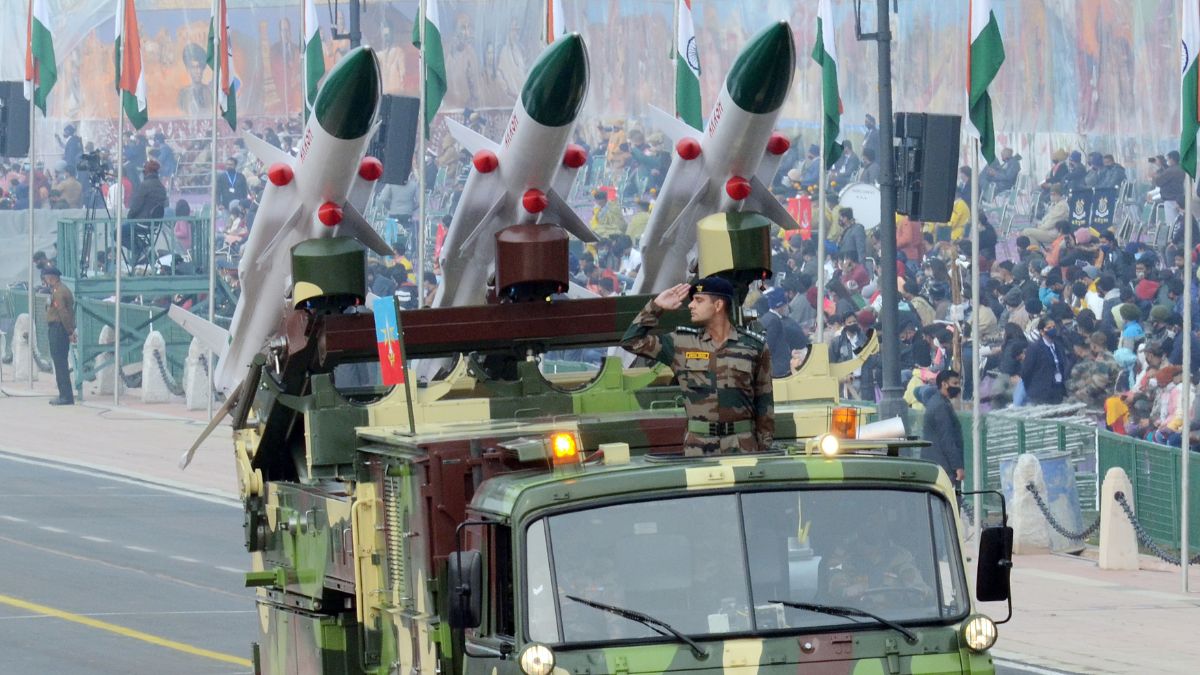
India's top defence-procurement body has cleared a package that reads like a direct response to the last war it fought. On 3 July 2026, the Defence Acquisition Council (DAC), chaired by Defence Minister Rajnath Singh, accorded Acceptance of Necessity (AoN) — in-principle administrative approval, the first formal step in a capital buy — to proposals worth about ₹52,000 crore, weighted heavily toward counter-drone, air-defence and anti-armour systems that are overwhelmingly Indian in origin.
What was approved
For the Indian Army, the DAC cleared procurement of the 'AKASH TARANG' Anti-Unmanned Aerial Vehicle Electronic Warfare System, Man-Portable Anti-Tank Guided Missile (MP-ATGM) systems, the Medium Range Surface-to-Air Missile (MRSAM) weapon system, the Very Short Range Air Defence System (VSHORADS), an Active Protection System for tanks, and a Jet-Based Kamikaze Drone System.
The intent behind each is specific. Akash Tarang is meant to give Army formations organic protection against the drones and loitering munitions that have redefined the modern battlefield, jamming and disrupting hostile UAVs rather than shooting them down one by one. MRSAM and VSHORADS layer medium- and short-range air defence above and below it. The Active Protection System is designed to defeat incoming anti-tank rounds before they strike, and the kamikaze-drone system pushes India further into the expendable-munition category that dominated recent conflicts.
The anti-tank centrepiece
The single most concrete line item is the MP-ATGM. Under the approval, the Army is set to receive 100 launchers, 2,300 missiles and five simulators, to be produced by the public-sector Bharat Dynamics Limited, in a project expected to cost more than ₹2,600 crore. The MP-ATGM is a third-generation, fire-and-forget weapon derived from India's Nag missile family; it carries an imaging-infrared seeker for day-and-night use, a tandem shaped-charge warhead to defeat reactive armour, and an effective range of roughly four kilometres. It has been through repeated Army-DRDO field trials — including warhead and top-attack tests at Pokhran — and this clearance moves it from validated prototype toward serial induction, closing a capability the infantry has long filled with imported systems.
Why it matters
Two threads run through the package. The first is self-reliance: nearly every headline system — Akash Tarang, MP-ATGM, VSHORADS, MRSAM's India-made elements — is indigenous or built by Indian firms, keeping the spending inside the domestic defence-industrial base under the Atmanirbhar Bharat push. The second is doctrine. The emphasis on counter-UAV electronic warfare, active protection and kamikaze drones reflects hard lessons from recent operations, where cheap drones and precision loitering munitions repeatedly out-leveraged expensive platforms. India is buying the tools to fight that kind of war — and, increasingly, building them at home.
An AoN is a beginning, not a contract: trials, cost negotiation and final Cabinet-level clearances still lie ahead before any of this reaches a frontline unit. But at ₹52,000 crore, the July clearance is one of the larger single-sitting approvals of the year, and its composition is a clear statement of where the Army thinks the next fight will be decided.
Sources
- 'AKASH TARANG', MP-ATGM among Rs 52,000 crore defence procurement proposals approved by DAC — India TV News
- 'Akash Tarang' EW system, anti-tank guided missiles & more: Why DAC's ₹52,000 crore push is a major deal — The Week
- DAC approves capital acquisition proposals worth Rs 52,000 crore — ANI News
- MPATGM — Wikipedia (technical background)