Cabinet Clears ₹62,500 Crore Mobile Phone Manufacturing Scheme to Deepen India's Electronics Value Chain
The Union Cabinet has approved a five-year, ₹62,500 crore Mobile Phone Manufacturing Scheme that ties incentives to domestic component sourcing and Indian brand R&D, aiming to move the country from phone assembly to deeper electronics value addition.
Manik Gupta
Founder and editor of DeepTech India. Manik writes about India's frontier technology ecosystem — AI, semiconductors, space, quantum, robotics and biotech — translating research and policy into clear, reliable reporting.
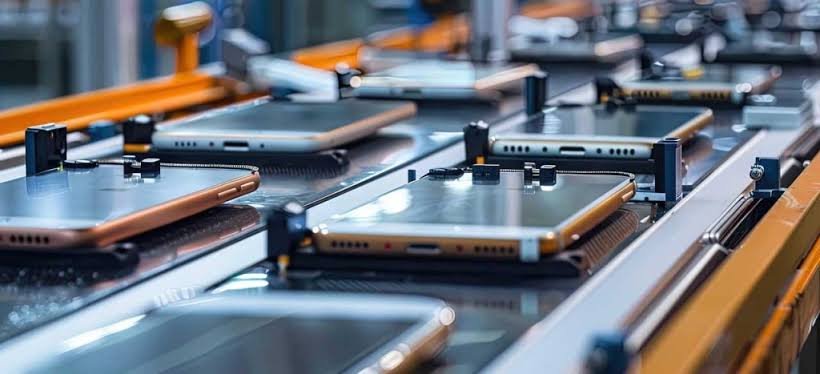
India assembles a lot of phones. What it does far less of is build the components inside them and design the devices from the ground up. On 15 July 2026, the Union Cabinet, chaired by Prime Minister Narendra Modi, approved a ₹62,500 crore Mobile Phone Manufacturing Scheme (MPMS) intended to push the country up that value chain — rewarding not just final assembly but domestic component sourcing and homegrown product design.
From assembly to value addition
Over the past decade, production-linked incentives helped turn India into the world's second-largest maker of mobile phones by volume, with Apple and Samsung suppliers running large plants in Tamil Nadu, Uttar Pradesh and Karnataka. But much of that activity has been assembly of imported parts, leaving domestic value addition relatively thin. The new scheme, which succeeds the earlier smartphone PLI as it winds down, is explicitly designed to change that mix by tying incentives to how much of the phone is genuinely made — and increasingly designed — in India.
The incentive architecture
MPMS will run for five years, from FY2026-27 to FY2030-31. It offers incentive support on eligible sales of mobile phones manufactured in India at differentiated rates ranging from 2.25% to 5%. On top of that base, the scheme layers two deliberate nudges toward deeper localisation:
- An additional incentive of up to 1.5% linked to domestic sourcing of key components and sub-assemblies — the parts that carry most of a phone's cost and technical value, such as displays, batteries, printed circuit boards and camera modules.
- A further incentive of up to 3% for Indian brands that invest in product design and research and development, a clause aimed at nurturing homegrown intellectual property rather than confining India to the last stage of a foreign supply chain.
That tiered structure is the policy's centre of gravity: it signals that the government wants component ecosystems and design houses, not just screwdriver plants.
Scale of the ambition
The numbers the government attaches to the scheme are large. Over its tenure, cumulative mobile-phone production is projected to reach roughly ₹39 lakh crore, with a significant increase in exports, and the programme is expected to generate around 60,000 direct jobs alongside a larger multiple of indirect employment. Coming days after the Cabinet cleared the ₹1,27,500 crore Semicon India Programme 2.0, MPMS forms part of a coordinated bet: chips, components and finished devices developed as an interlocking domestic stack rather than in isolation.
Why it matters for deep tech
At first glance a phone-assembly subsidy looks like industrial policy rather than frontier technology. The deep-tech relevance lies in the details. Displays, camera modules, batteries and PCBs sit at the intersection of advanced materials, precision manufacturing and semiconductor packaging — capabilities that spill over into everything from medical devices to defence electronics. By financially rewarding firms that localise these components and invest in R&D, the scheme is trying to seed the supplier base and engineering talent that a genuine electronics-hardware industry depends on. Whether it works will hinge on execution: component manufacturing demands patient capital, reliable power and water, and deep supplier networks that take years to mature.
The road ahead
Guidelines, eligibility thresholds and the mechanics of verifying domestic value addition will determine how much of the ₹62,500 crore actually flows toward components and design versus assembly-as-usual. The design-linked 3% incentive, in particular, is a novel lever whose impact will be worth watching. But the direction of travel is clear. After a decade spent proving it can assemble phones at scale, India is now paying to build what goes inside them — and to design the devices that carry its own brands.
Sources
- Cabinet approves Mobile Phone Manufacturing Scheme (MPMS) — Manorama Yearbook
- Cabinet approves ₹62,500 crore Mobile Phone Manufacturing Scheme — Organiser
- Mobile phone manufacturing scheme gets cabinet approval — India TV News
- Cabinet Approves Rs 62,500 Crore Mobile Phone Manufacturing Scheme — Trak.in
- Cabinet-approved mobile phone manufacturing scheme to drive India's electronics manufacturing — DD India
Tags
More from Miscellaneous
Minimac Systems Raises ₹30 Crore to Turn Industrial Oil Into a Circular Resource, Not Waste
Minimac Systems has raised ₹30 crore in a pre-Series A round led by Zerodha's Rainmatter to scale mobile, miniaturised units that restore industrial lubricant on-site instead of trucking it away as waste.
The/Nudge Foundation Launches TILT, a ₹250 Crore Fund for India's 'Next Billion' Tech Startups
The/Nudge Foundation has launched TILT, a ₹250 crore impact-investment platform backing seed-to-Series A science and technology startups working on livelihoods, climate resilience and financial inclusion.