
BioE3 and the ₹2,000 Crore Fund Powering India's Biomanufacturing Push
India's bioeconomy hit $195.3 billion in 2025. The new ₹2,000 crore BIRAC-RDI Fund and the BioE3 policy's shared biofoundries target the country's real bottleneck for synbio founders: scale-up capex, not science.
Manik Gupta
Founder and editor of DeepTech India. Manik writes about India's frontier technology ecosystem — AI, semiconductors, space, quantum, robotics and biotech — translating research and policy into clear, reliable reporting.
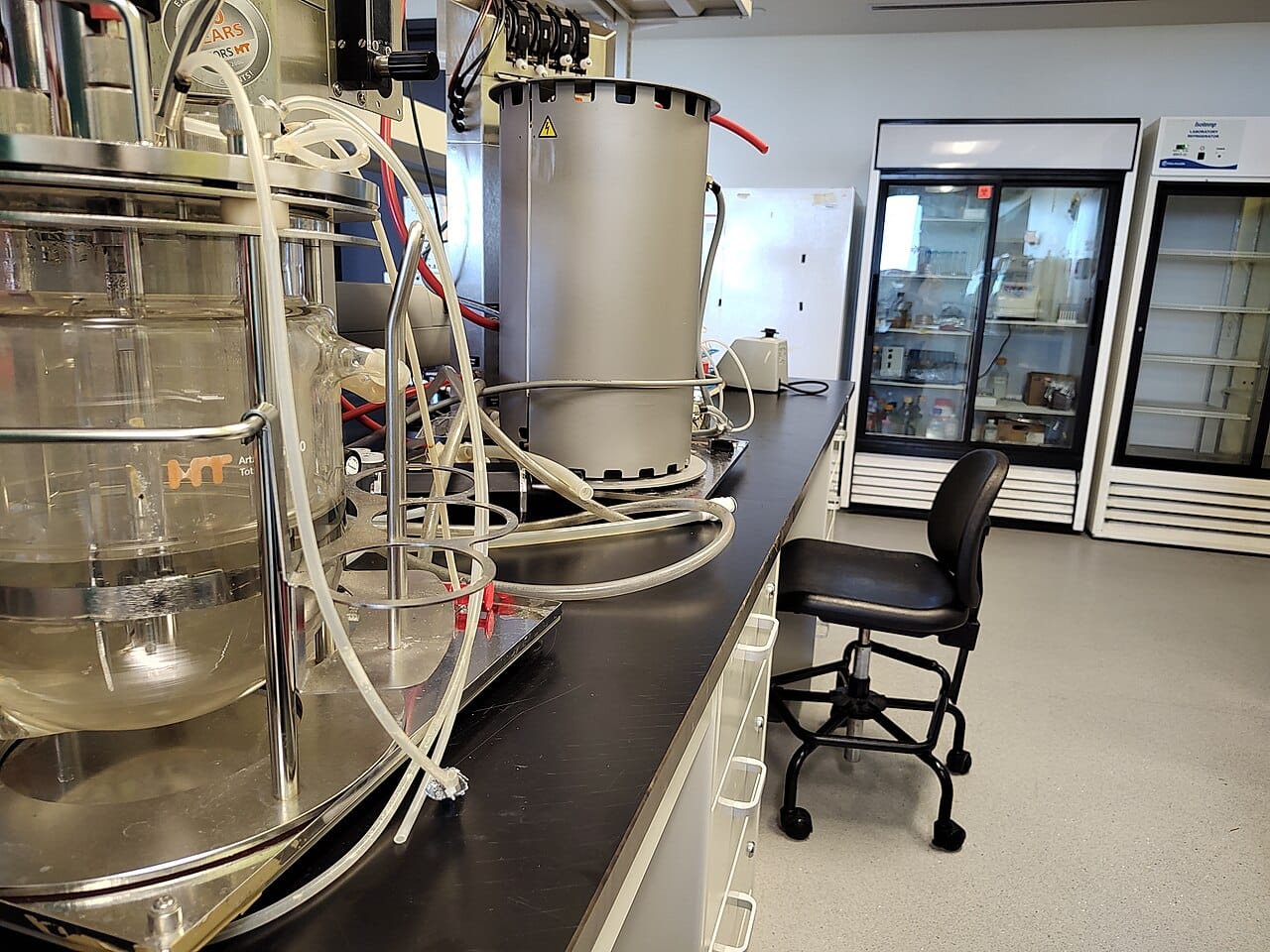
India's bioeconomy reached $195.3 billion in 2025, up 18% year on year and now roughly 5% of GDP, with a stated target of $300 billion by 2030. Hitting that number requires moving beyond pharmaceuticals and into industrial biomanufacturing, the production of chemicals, materials, foods and fuels using engineered biology. Two policy instruments are being assembled to fund that shift, and both attack the same structural problem: capital, not science, is the binding constraint on Indian synthetic-biology startups.
A growth-stage fund for a missing capital layer
The BIRAC-RDI Fund, launched in February 2026, is India's first dedicated growth-stage biotech vehicle. It deploys ₹2,000 crore over five years through equity, convertibles and long-term debt, and is explicitly scoped to back technologies from TRL-4 to TRL-9, the technology-readiness band that runs from validated prototype to commercial deployment.
That band is where Indian biotech has historically bled out. Public grants and incubation support cover early lab work, and conventional venture capital is comfortable with software-like risk profiles. Neither suits a company that has a working strain but needs ₹50 to ₹200 crore to build pilot and commercial fermentation capacity. The "valley of death" between proof of concept and first commercial plant is a capex problem, and equity-only VC is poorly structured to fund depreciating steel. A fund that can blend equity with long-term debt is better matched to assets with industrial economics. BIRAC's cumulative deployment now exceeds ₹4,200 crore, but the RDI Fund is the first tranche aimed squarely at scale-up rather than discovery.
BioE3 and shared physical infrastructure
The complementary lever is the BioE3 policy (Biotechnology for Economy, Environment and Employment), cleared by the Cabinet in August 2024. Where the RDI Fund supplies capital, BioE3 supplies physical infrastructure: a national network of Bio-AI hubs, Biofoundries and Biomanufacturing Hubs, branded "Moolankur BioEnablers," built on a Design-Build-Test-Learn (DBTL) model.
The DBTL loop is the operating logic of modern synthetic biology. You design a genetic construct, build the strain, test its performance, and feed the data back into the next design cycle, ideally with machine-learning models guiding which variants to try. Running that loop fast requires expensive automation, analytics and pilot fermenters that no single early-stage company can justify owning. The Bio-AI call offers ₹25 crore per hub and closes in June 2026. BioE3 targets 250-plus startups and roughly 10,000 jobs.
The investment logic
The thesis for investors is straightforward and structural. The number-one cost for a fermentation or synbio founder is scale-up capex: bioreactors, downstream processing, and the pilot runs needed to prove a process at volume before a customer or financier will commit. Shared pilot and pre-commercial infrastructure socialises that cost. A startup that can rent time on a public biofoundry instead of building its own reaches a bankable, de-risked process at a fraction of the capital, and at lower dilution.
That is a genuine tailwind for fermentation and synthetic biology specifically, because those are the sub-sectors where capex intensity, not biology, has throttled Indian entrants. The combination is deliberate: BioE3 lowers the fixed cost of getting to a commercial-ready process, and the RDI Fund provides the growth capital, in instruments suited to industrial assets, to build the first plant once the process works.
The risk is execution. Government-built shared facilities have a mixed record on utilisation and uptime, and a ₹2,000 crore fund is modest against a $300 billion ambition. But the diagnosis is correct. India's biomanufacturing bottleneck has always been infrastructure and growth capital, and for the first time both are being addressed with purpose-built instruments rather than generic grants.
Tags
More from Biotechnology
BIO-NIVESH Links Biotechnology Startups With Investors
The September 3 launch brought 20 ventures together with around 50 investors. It is an engagement platform, with future partnerships and technology progress still to track.
Ultrahuman Raises $70 Million for Wearables and Health-Intelligence Research
The September 3 financing backs Ultrahuman’s effort to connect wearable, blood and environmental data. The technical question is whether those signals produce useful, reproducible insights—not whether investor names validate the product.