Bharat Innovates 2026: How Nice Became the Pivot Point for Indian Deep Tech
At Bharat Innovates 2026 in Nice, ~$254.5M in FDI and 50+ agreements signalled Indian deep tech's rotation from low-margin SaaS to sovereign hardware — with IITM anchoring a ~$100M pipeline and a domestic grant matrix bridging the valley of death.
Manik Gupta
Founder and editor of DeepTech India. Manik writes about India's frontier technology ecosystem — AI, semiconductors, space, quantum, robotics and biotech — translating research and policy into clear, reliable reporting.
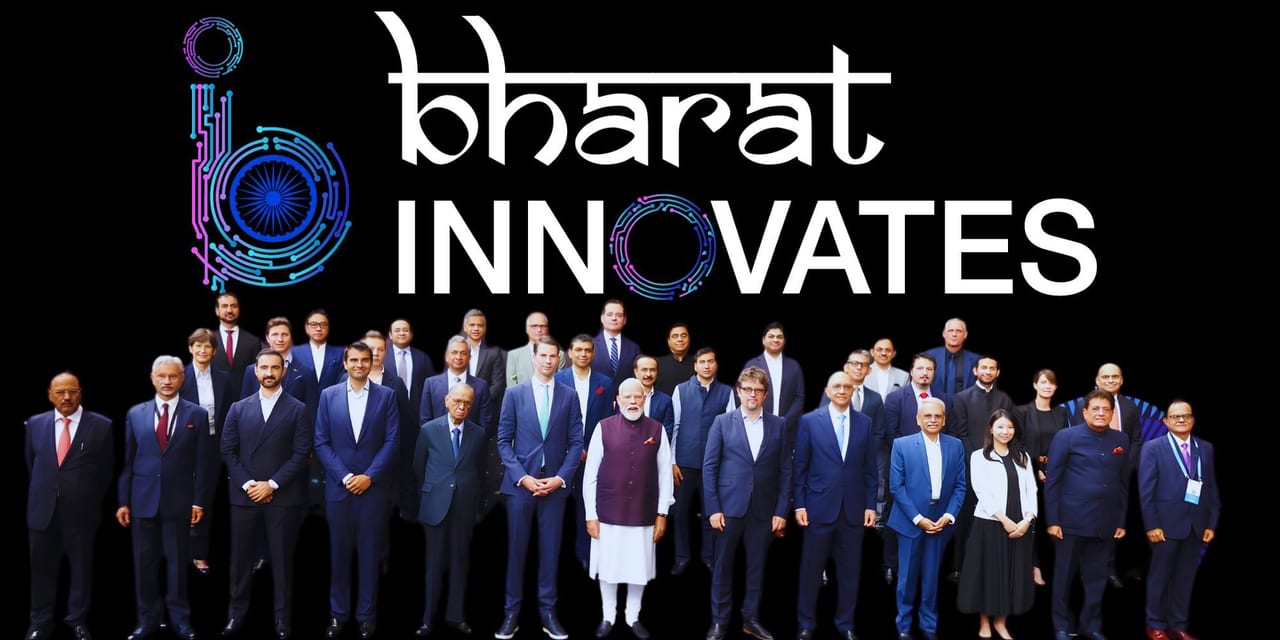
For three days in mid-June, the centre of gravity of Indian deep tech sat not in Bengaluru or Hyderabad but in Nice. The inaugural Bharat Innovates 2026 summit (14-16 June, Nice, France), convened by the Union Ministry of Education with the Government of India, mobilised roughly $254.5M in FDI and produced 50-plus bilateral agreements. Per YourStory, the inflows were driven largely by US and Japanese funds scaling late-stage Indian hardware — a detail that matters more than the topline, because it marks the moment foreign capital started treating Indian deep tech as a place to write growth cheques, not just seed bets.
The pivot: from SaaS margins to sovereign hardware
The structural story is a migration of where Indian deep-tech capital wants to be. For a decade the default was high-volume, low-margin SaaS — software businesses that scale cheaply but compete in commoditised global markets. Bharat Innovates signalled a deliberate rotation toward sovereign hardware, advanced space propulsion and cryptographic infrastructure, with Indian IP routing directly into the European industrial base.
IIT Madras and IITM Global anchored a roughly $100M value-creation pipeline through 7-9 commercial MoUs, and the names on those deals read like a map of the new thesis. Agnikul signed with ICEYE and Safran in space and aerospace propulsion; ePlane paired with the Indian Angel Network on electric flight; Detect Technologies linked up with TotalEnergies on industrial AI inspection; and a cluster of advanced-engineering tie-ups — iElectron with ALTEN, TuTr Hyperloop with thyssenkrupp, and QNu Labs with TU/e and SAGA — anchored the deep-hardware and quantum-secure-communications end of the pipeline.
The pattern is consistent: Indian deep-tech firms are pairing with European industrial primes that bring manufacturing scale, certification pathways and offtake. Detect Technologies' work with TotalEnergies, for instance, applies CNN-based anomaly detection to industrial asset inspection — exactly the kind of physical-world AI that European energy and heavy-industry incumbents need but rarely build in-house. QNu Labs' tie-up routes Indian quantum-key-distribution IP into a European research-and-defence axis. This is Indian intellectual property finding a customer base in the world's most demanding industrial markets.
Bridging the valley of death: the 2026 grant matrix
Late-stage FDI only works if there is a pipeline of companies that survive long enough to receive it. The hardest stretch for any deep-tech founder is the "valley of death" — the gap between a working prototype and a revenue-bearing product, where capital needs are high, technical risk is unresolved, and conventional venture investors hesitate. As of June 2026, a domestic grant matrix is active specifically to bridge it:
- iDEX Open Challenge (Defence Innovation Organisation, up to ₹1.5 crore, space/defence)
- SLINGSHOT 2026 (Enterprise Singapore, up to ₹2.97 crore)
- NERVE CoE OCP (MeitY Nagpur, up to ₹50 lakh, AI/edge/GPU)
- Thiel Fellowship ($250k, non-equity)
- The Bharat Innovates Fund (IITM Global with Agna Capital, for EU-market scaling)
The design intent is layered: non-dilutive public grants de-risk the early technical milestones, while the Bharat Innovates Fund and foreign late-stage capital pick up the scaling cost once the technology is proven. The state absorbs the riskiest rupees; private and cross-border capital funds the multiplication.
The thesis running through Nice — and the claim worth weighing as an investor — is that Indian deep tech has reached "commercial escape velocity." The evidence is the shift in who is funding what: Japanese and US growth funds underwriting Indian hardware, European primes signing offtake-shaped MoUs, and a grant stack engineered to keep the pipeline alive. Per NewsHub and DT Next, the inaugural edition closed with more than 50 agreements signed. The caveat is equally plain: MoUs are intent, not revenue, and escape velocity is only proven once these partnerships convert into shipped product and recurring contracts.
Tags
More from Miscellaneous
Four Indian Ventures Join Google DeepMind’s AI for the Planet Cohort
Terrastack, Varaha Climate, Farmers for Forests and Climitra Carbon join the APAC programme, announced on 7 September.
CSIR’s Kolkata RISE Conclave Connects Four Labs With Industry
The September 6–7 programme linked minerals, medicine, materials and machinery. Its reported transfer initiatives need to be followed through to licensing, validation and production.